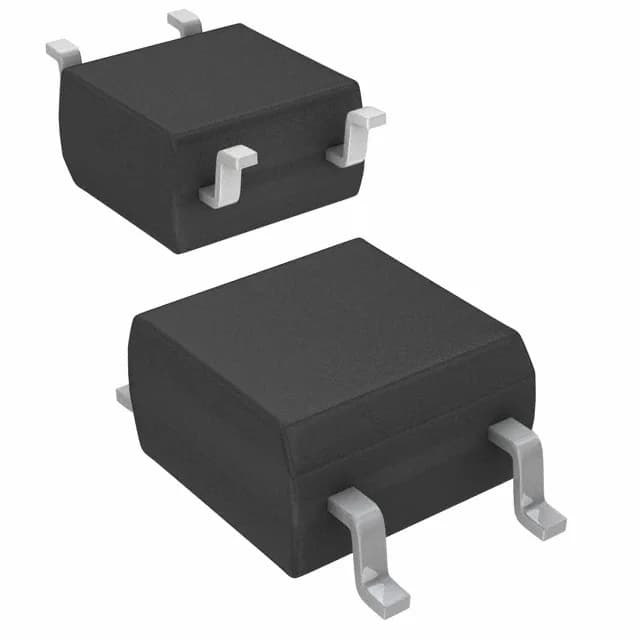
Triac output optocoupler for AC load control
The Toshiba TLP265J(V4T7TL,E is a single-channel Triac output optocoupler in a 6-SOIC surface-mount package. It provides 3750Vrms isolation between the input LED and the output Triac, with a 600 V off-state voltage rating. The 20 µs turn-on time and 500 V/µs minimum static dV/dt immunity make it suited for driving AC loads like solenoids, relays, and small motors in industrial control, appliance, and HVAC equipment. The non-zero-crossing output (no internal zero-cross circuit) means the Triac can be triggered at any point in the AC cycle, useful for phase-control dimming or soft-start applications.
Key ratings for BOM fit
The 7 mA maximum LED trigger current (Ift) sets the drive requirement — any microcontroller GPIO or logic output can drive it through a series resistor. The 50 mA maximum forward current (If) gives headroom for higher-drive applications. The 1.27 V typical forward voltage (Vf) is standard for infrared LEDs. The 70 mA RMS on-state current (It) is the maximum continuous load the Triac can handle; for inductive loads like small motors or contactors, derate and add a snubber network to stay within the 500 V/µs dV/dt rating. The 1 mA typical hold current (Ih) means the Triac will stay latched once triggered as long as the load current stays above that threshold — important for low-current loads that might drop below 1 mA near the AC zero crossing.
Active lifecycle and compliance
It is RoHS compliant (no lead or restricted substances above the threshold), so it qualifies for EU and other RoHS-regulated markets without exemption paperwork. The approvals from CQC, cUR, UR, and VDE cover safety certification for equipment sold in China, North America, and Europe respectively — a single part that satisfies multiple regulatory jurisdictions.
Package and mounting
It is surface-mount only, intended for reflow soldering.