600 V off-state, 500 V/µs dV/dt — triac coupler for noisy mains
The TLP265J(V4-TPL,E is a single-channel triac output optoisolator from Toshiba, designed to switch AC loads from a low-voltage logic or MCU port while maintaining galvanic isolation. The 600 V off-state voltage covers 240 VAC mains with margin for surges; the 500 V/µs minimum static dV/dt prevents false turn-on from line transients or fast-switching inductive loads — a common failure point in motor drives and solenoid valve controls. With a 3750 Vrms isolation rating and approvals from CQC, cUR, UR, and VDE, this part meets reinforced insulation requirements for IEC/UL 62368 and 60950-based equipment. The non-zero-crossing output means the triac fires immediately when the LED current exceeds the 10 mA trigger threshold — suited for phase-angle dimming or fast-switching applications where zero-cross delay is unacceptable.
20 µs turn-on, 70 mA RMS on-state — load and timing budget
The triac turns on in 20 µs typical from LED trigger, which sets the minimum PWM period for phase control — at 50/60 Hz, half-cycle is 8.3–10 ms, so the 20 µs delay is negligible for most AC switching. The maximum on-state RMS current is 70 mA, which drives small AC loads directly (e.g., a 5–10 W fan or relay coil) or gates a larger external triac/SCR. LED forward voltage is 1.27 V typical, compatible with 3.3 V and 5 V logic outputs through a current-limiting resistor. The hold current is 1 mA typical — below this the triac drops out of conduction, so the load current must exceed this threshold to maintain latching once triggered.
Active production, 6-SOP package, -40°C to 100°C range
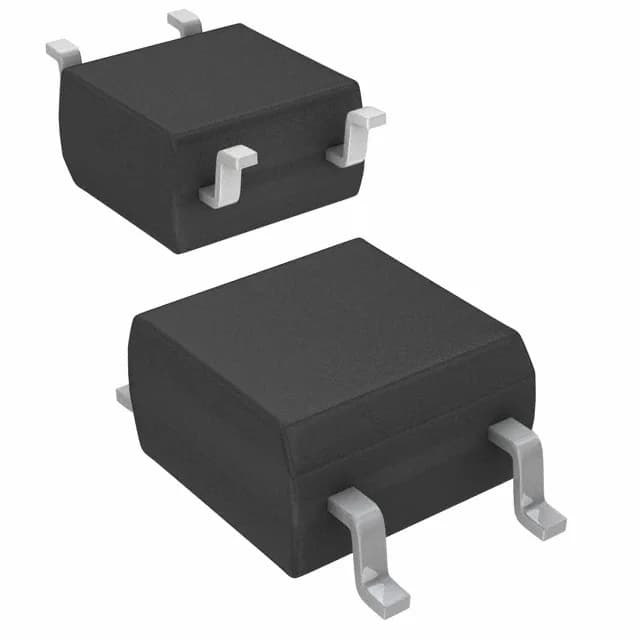
The 6-SOP package with 4 leads is a standard SOIC-6 footprint, 0.173-inch body width, suitable for reflow soldering.