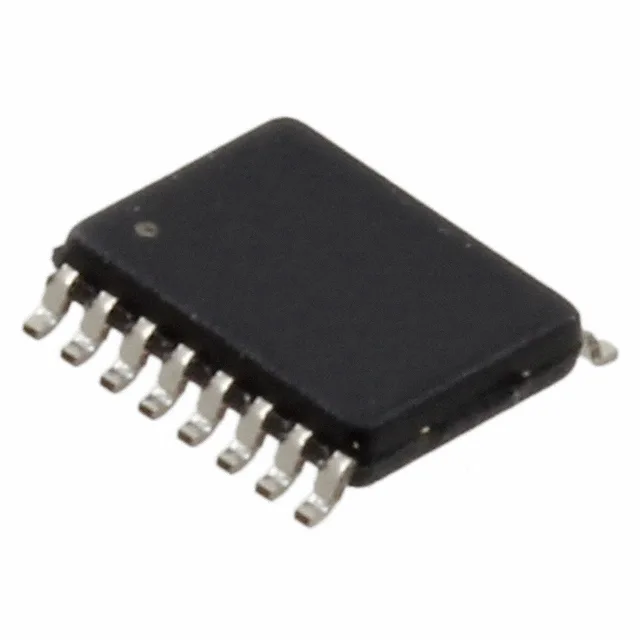
Dual monostable multivibrator for timing and pulse shaping
The TC74VHC221AFK(EL,K is a dual monostable multivibrator from Toshiba's 74VHC series, designed for generating precise output pulses of programmable width from an input trigger. It integrates two independent monostable circuits with Schmitt trigger inputs on the trigger and reset pins, giving it clean edge detection even on slow or noisy signals — useful for switch debouncing, pulse stretching, and timing delays in mixed-voltage logic systems. Outputs source and sink 8 mA each, enough to drive a standard CMOS load or a small LED indicator directly.
Package and footprint — 16-VSSOP
Housed in a 16-VFSOP (0.118", 3.00 mm width) case, also referred to as 16-VSSOP in the supplier device package field. This is a fine-pitch surface-mount package — the 0.65 mm or 0.5 mm pitch (check the mechanical drawing) means a standard FR-4 board with proper solder mask works, but the reflow profile needs a good thermal soak to avoid tombstoning on the small pads. Store the reels dry; MSL is typically level 1 for this package family, but verify the bag label before bake decisions.
Schmitt trigger inputs — noise immunity without extra parts
Both the trigger (A, B) and reset (CLR) inputs include Schmitt trigger hysteresis. This means a slow-rising edge from a mechanical switch or a long RC delay line won't cause multiple triggers as the signal wobbles through the threshold. For a debounce circuit, you can use a simple RC network into the A input and get a clean single pulse out — no external schmitt buffer needed.
The ROHS3 exemption-free status means it ships without any substance-of-concern paperwork for EU markets.