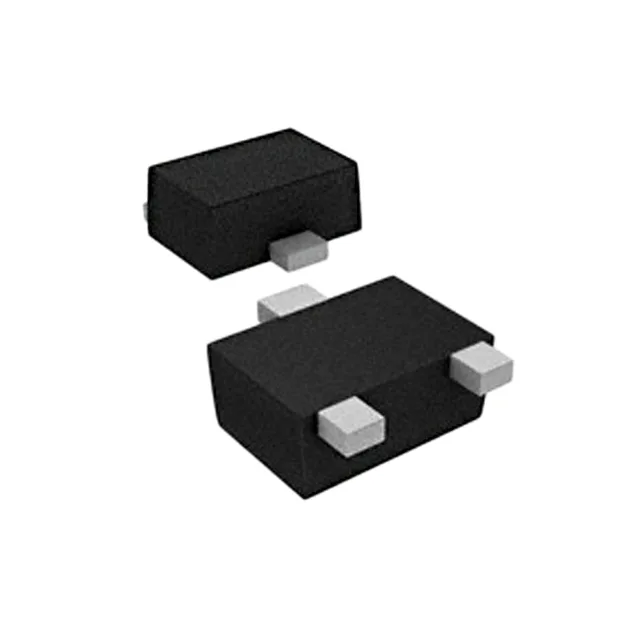
Toshiba Semiconductor RN1132MFV,L3F — Crystals & Oscillators

RN1132MFV,L3F Pre-Biased NPN Transistor – Toshiba SOT-723

MPNRN1132MFV,L3F
End of Life

Toshiba Semiconductor RN1132MFV,L3F NPN pre-biased transistor, 50 V VCEO, 100 mA IC, 150 mW power dissipation, SOT-723 surface-mount package, integrated 200 kΩ base resistor (R1).

$0.17Ref. price · indicative, final on quote
PackagingSOT-723
RoHSROHS3 Compliant
Sourced new & surplus through independent channelsAuthenticity-screened · ESD-safe packingListing updated Aug 2026

Specifications

RN1132MFV,L3F specifications
ParameterValue
MountingSurface Mount
FET typeNPN - Pre-Biased
Voltage - collector emitter breakdown50 V
Current - collector (Ic)100 mA
Current - collector cutoff100nA (ICBO)
DC current gain (hFE) (Min) @ ic, vce120 @ 1mA, 5V
Power - max150 mW
PackageTape & Reel (TR); Cut Tape (CT)
CaseSOT-723
Resistor - base (R1)200 kOhms
Vce saturation (Max) @ ib, ic300mV @ 500µA, 5mA

Product details

Pre-biased NPN with integrated 200 kΩ base resistor

The RN1132MFV,L3F is a Toshiba NPN pre-biased transistor in a SOT-723 package (VESM supplier device package). It integrates a 200 kOhm base resistor (R1), eliminating one external component per channel and saving board space in high-density layouts. The built-in resistor biases the base directly from a microcontroller GPIO or logic output without an additional series resistor.

hFE and saturation performance at low current

Minimum DC current gain (hFE) is 120 at Ic = 1 mA, Vce = 5 V. This gain floor ensures reliable saturation in low-current switching. Vce saturation is specified at 300 mV maximum with Ib = 500 µA and Ic = 5 mA, confirming the transistor can saturate fully even with the limited base drive available through the 200 kOhm resistor from a standard logic output.

Active production and ordering options

Frequently asked questions

What is the hFE of the RN1132MFV,L3F at 1 mA?

This is the gain you can rely on for low-current switching designs.

Does the RN1132MFV,L3F have a built-in base resistor?

Yes, it integrates a 200 kOhm base resistor (R1) between the base terminal and the transistor die. This eliminates the need for an external series resistor when driving the base from a logic output.