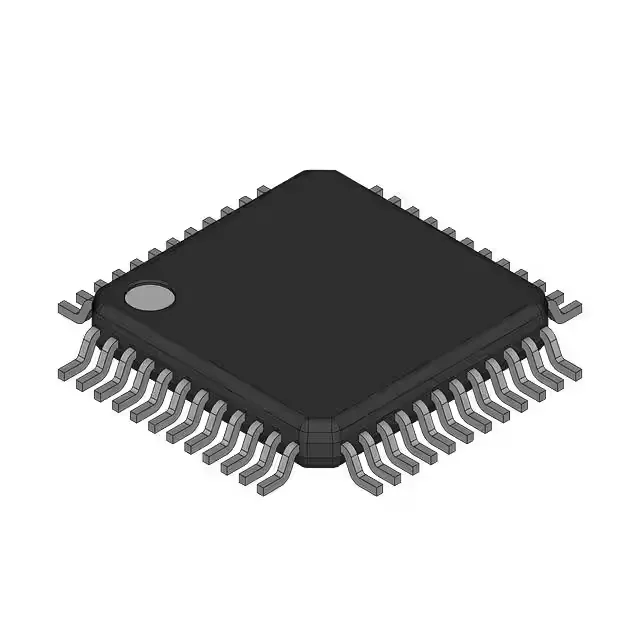
Texas Instruments VCA2612Y-1/2K — Logic ICs

VCA2612Y-1/2K Variable Gain Amplifier, 40 MHz Bandwidth

MPNVCA2612Y-1/2K
End of Life

Texas Instruments VCA2612Y-1/2K, Variable Gain Amplifier, dual channel, 40 MHz -3 dB bandwidth, 300 V/µs slew rate, differential output, 4.75 V to 5.25 V supply, 48-TQFP, -40°C to 85°C.

$18.32Ref. price · indicative, final on quote
Packaging48-TQFP
StockContact for availability
MOQ1 pcs
  • 100% new & originalTraceable channels only — no refurbs, no pulls, no remarked parts.
  • Date & lot codes on quoteStated per line before you commit; label photos on request.
  • MSL-compliant ESD packingMoisture-sealed bags with indicator cards; reels photo-verified.
  • PayPal buyer protectionPay by T/T, PayPal or Payoneer — card payments covered end to end.

Specifications

VCA2612Y-1/2K Technical Specifications
ParameterValue
Output typeDifferential
Mounting typeSurface Mount
Amplifier typeVariable Gain
Voltage - supply span5.25 V
Current - input bias1 nA
Current - output (Channel)40 mA
Operating temperature-40°C ~ 85°C
-3db bandwidth40 MHz
Gain bandwidth product80 MHz
PackageBulk
Slew rate300V/µs
Case48-TQFP
Number of circuits2

Product details

What this VGA does — and where it lands in the signal chain

Its 40 MHz -3 dB bandwidth and 300 V/µs slew rate target applications where you need to adjust gain dynamically across a wide frequency range — think ultrasound front-ends, medical imaging receive chains, or test equipment automatic gain control loops. The differential output pairs naturally with high-speed ADCs that expect a differential input, saving you an external balun or single-ended-to-differential stage.

The 40 MHz -3 dB bandwidth covers the fundamental and several harmonics of a 5–10 MHz ultrasound transducer array, which is the classic use case. The 300 V/µs slew rate means the amplifier can swing a large output signal (several volts peak-to-peak) without slewing into distortion — critical when the gain is turned up and the input pulse is fast. Together these specs tell you the part is designed for large-signal dynamic range, not just small-signal AC gain.

Dual channel, differential output — board layout considerations

Two channels in a single 48-TQFP (7x7 mm) save board space compared to two single-channel VGAs. The differential output on each channel means you route a pair of traces per channel to the ADC — keep them matched in length and impedance. Input bias current is 1 nA typical, which is low enough that you do not need a guard ring around the inputs for most layouts, but the 40 mA output per channel can drive a capacitive load like an ADC input directly if you watch the phase margin.

Plan for a clean 5 V rail; the 40 MHz bandwidth will couple supply noise into the output if the rail is dirty. Surface-mount only, in a 48-TQFP with a 7x7 mm body — fine for reflow, but the fine pitch (0.5 mm typical for TQFP-48) means a good solder paste stencil and alignment.

Frequently asked questions

What is the -3 dB bandwidth of VCA2612Y-1/2K?

The -3 dB bandwidth is 40 MHz. That bandwidth, combined with the 300 V/µs slew rate, makes this VGA suited for high-speed signal chains like ultrasound receive channels or test equipment AGC loops.