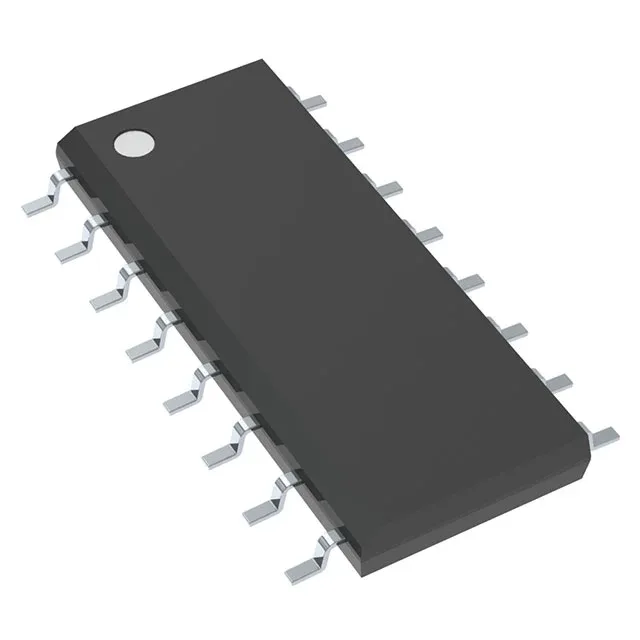
PFC controller for CCM boost stages
The Texas Instruments UCC29950D is a power factor correction (PFC) controller operating in Continuous Conduction Mode (CCM), designed for boost-type PFC stages in AC-DC power supplies. It switches between 87kHz and 109kHz, suiting magnetic component sizing for designs from a few hundred watts up to several kilowatts.
Switching frequency and magnetic sizing
The 87kHz to 109kHz switching range is typical for CCM PFC controllers — fast enough to keep the boost inductor small, but not so high that gate-drive losses or switching losses dominate. At 100kHz, a 400W PFC stage with a 400V output bus needs roughly a 400µH to 600µH inductor; the controller's internal oscillator tolerance (±11% around the center frequency) is tight enough to avoid saturating the core across temperature. If you are targeting a specific EMI frequency band, the 87kHz lower edge helps keep the fundamental below 150kHz for CISPR 22 Class B conducted emissions compliance.
The 125°C junction temperature allows the controller to share a heatsink or be placed near the boost MOSFET and diode without derating the bias supply. No AEC-Q100 qualification is listed, so for under-hood automotive designs you would need to check the TI qualification status separately.
ROHS3 compliant per the listing.