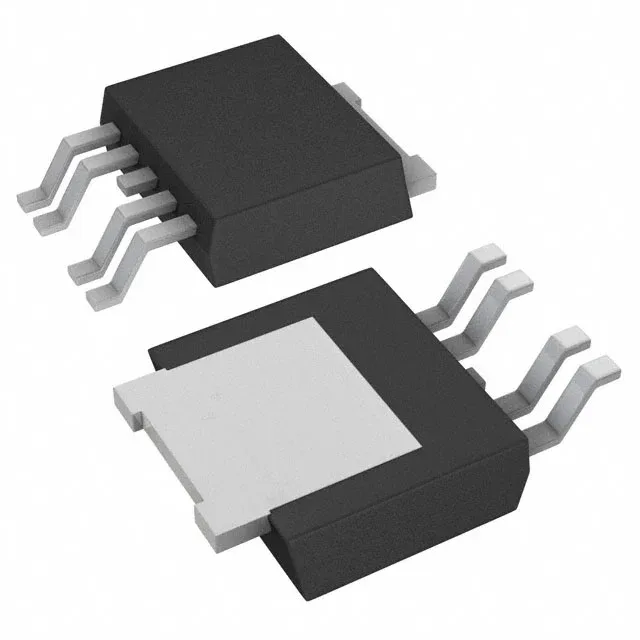
40 V input, 500 mA output — sizing the rail for automotive and industrial
It accepts up to 40 V on the input pin, which covers 12 V and 24 V battery systems including load-dump transients without external pre-regulation. The output is adjustable from 1.2 V up to 18 V, delivering up to 500 mA. Quiescent current is 26 µA typical, which keeps the standing load on the battery low in always-on ECU modules.
AEC-Q100 and 150°C junction — deployment in under-hood and engine-bay environments
The 40 V input rating handles the 36 V load-dump clamp typical in 12 V systems, and the 500 mA output is enough to power a small microcontroller plus a few peripheral loads.
70 dB PSRR at 1 kHz — clean rail for noise-sensitive loads
The 70 dB power-supply rejection ratio at 1 kHz is strong for a 500 mA LDO. It means the output stays clean even when the input bus carries ripple from an alternator or a switching pre-regulator. This matters for analog sensor supplies, audio codec rails, and CAN transceiver VCC where conducted noise on the 12 V bus would otherwise couple into the signal path. The dropout voltage is 0.570 V maximum at 500 mA, so a 5 V input can hold a 3.3 V rail through cold-crank conditions down to about 3.9 V input.
Control and protection features — built-in supervision
The part integrates current limit, over-temperature shutdown, and under-voltage lockout (UVLO), plus a Power Good output and an Enable pin. The UVLO threshold prevents the regulator from trying to regulate below its minimum input voltage, which avoids erratic output behaviour during a slow battery ramp. The Enable pin lets a system supervisor or a sequencing controller turn the rail on and off without a separate load switch.