0.3V minimum input — starts from a nearly dead cell
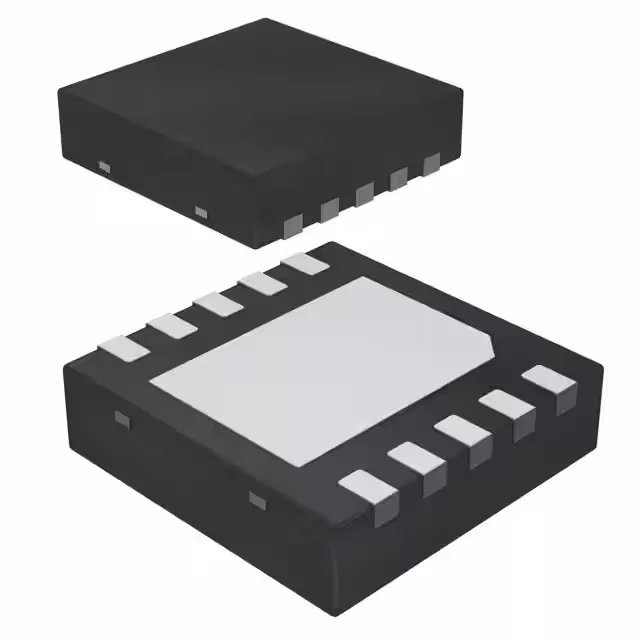
The TPS61202DSCTG4 is a step-up (boost) converter from Texas Instruments that starts up from an input as low as 0.3V and delivers a fixed 5V output. That sub-0.5V minimum input is the headline feature: it lets the converter keep running off a single alkaline or NiMH cell that has discharged to nearly empty, which is the difference between a device that works through the full battery life and one that cuts out early. The 1.2A switch current limit sets the maximum output current at 5V — roughly 200–300 mA depending on input voltage and efficiency, so size the load budget accordingly.
Synchronous rectification and switching frequency
The part integrates a synchronous rectifier, which replaces the usual boost diode with a low-Rds(on) FET. That pulls efficiency up at light loads — a real advantage in always-on or standby applications where every milliwatt counts. The switching frequency runs between 1.25 MHz and 1.65 MHz, which keeps the inductor small (typically 2.2 µH to 4.7 µH) and pushes the fundamental switching noise above the AM band, easing input filter design.