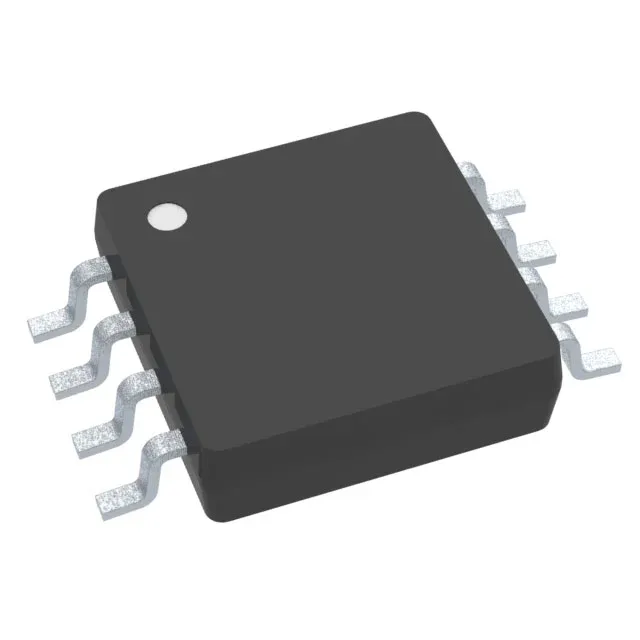
Texas Instruments TPS2399DGK — Analog & Data Acquisition

TPS2399DGK Hot Swap Controller, -48V, 8-VSSOP

MPNTPS2399DGK
End of Life

Texas Instruments TPS2399DGK Hot Swap Controller, -48V, 1-channel, no internal switch, programmable current limit/fault timeout/slew rate, UVLO, auto-retry, -80V to -36V supply, 700 µA supply current, -40 to 85°C, 8-VSSOP package, Tube.

$4.78Ref. price · indicative, final on quote
Packaging8-TSSOP, 8-MSOP (0.118", 3.00mm Width)
StockContact for availability
MOQ1 pcs
  • 100% new & originalTraceable channels only — no refurbs, no pulls, no remarked parts.
  • Date & lot codes on quoteStated per line before you commit; label photos on request.
  • MSL-compliant ESD packingMoisture-sealed bags with indicator cards; reels photo-verified.
  • PayPal buyer protectionPay by T/T, PayPal or Payoneer — card payments covered end to end.

Specifications

TPS2399DGK Technical Specifications
ParameterValue
TypeHot Swap Controller
Mounting typeSurface Mount
Voltage-80V ~ -36V
Current - supply700 µA
Operating temperature-40°C ~ 85°C
PackageTube
FeaturesAuto Retry, UVLO
Applications-48V
Case8-TSSOP, 8-MSOP (0.118\", 3.00mm Width)
Internal switchNo
Number of channels1
Programmable featuresCurrent Limit, Fault Timeout, Slew Rate

Product details

What this -48V hot swap controller does on the backplane

The Texas Instruments TPS2399DGK is a single-channel hot swap controller designed for -48V telecom and industrial backplanes. It manages inrush current during card insertion and provides overcurrent protection with a programmable current limit, fault timeout, and slew rate. The part includes auto-retry and undervoltage lockout (UVLO) as built-in features, and it operates from a -80V to -36V supply rail, drawing 700 µA of supply current. Housed in an 8-VSSOP package, it is rated for the industrial temperature range of -40°C to 85°C, making it suitable for outdoor telecom cabinets, base stations, and -48V distributed power systems where board swapping happens live.

Supply voltage and what it means for your -48V rail

The -80V to -36V supply range covers the full tolerance band of a nominal -48V telecom bus, including transients and battery float voltages. If your backplane runs at -48V nominal with a -36V brownout threshold and -60V transient peaks, this controller stays within its operating window. The UVLO feature can be set to hold off the external MOSFET until the rail is above a safe minimum, preventing partial turn-on that would cook the pass element.

Programmable protection — setting the inrush and fault behavior

Three programmable parameters — current limit, fault timeout, and slew rate — let you tailor the startup ramp and fault response to the load capacitance and system coordination. A slow slew rate limits inrush into a bank of bulk capacitors; a fast fault timeout clears a short before the upstream breaker trips. The auto-retry feature means the controller will keep trying to restart after a fault, which is useful for transient loads but can be a nuisance if the fault is permanent — plan your retry count with external logic if needed.

Package and mounting — fits the 8-VSSOP footprint

The TPS2399DGK comes in an 8-VSSOP surface-mount package, 3.00 mm width. The Tube shipping medium is typical for prototype and low-volume builds.

Lifecycle and sourcing — active, no LTB concern

It is ROHS3 compliant.

Frequently asked questions

Where can I buy TPS2399DGK?

Buyers need to find a reliable distributor to purchase the component quickly.

What is the price of TPS2399DGK?

Sourcing buyers need to compare pricing for budget and BOM costing.

What is the datasheet for TPS2399DGK?

Design engineers need to verify electrical characteristics and pinout for circuit design.

Is TPS2399DGK in stock?

Immediate availability is critical for production or repair to avoid delays.

What are the alternatives or equivalents to TPS2399DGK?

Buyers and engineers consider alternative parts for sourcing flexibility or better specs.

What is the lifecycle status of TPS2399DGK?

Brokers and procurement need to know if part is active, EOL, or obsolete for long-term support.