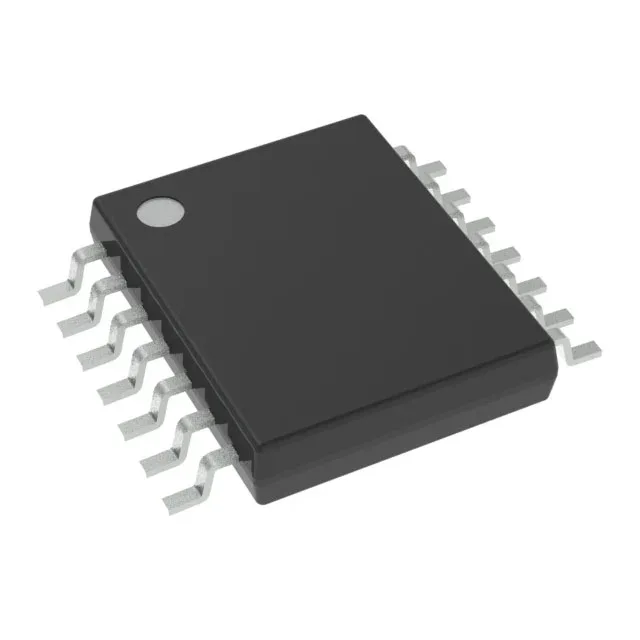
The Texas Instruments TPS2350PW is a -48V hot swap controller designed for telecom and networking equipment that runs on a nominal -48V backplane. It manages three independent channels, letting you sequence or protect multiple loads from a single controller. The supply range covers -80V to -12V, so it handles the full -48V telecom rail including transients and cold-crank dips. Programmable features — current limit, fault timeout, overvoltage protection (OVP), slew rate, and undervoltage lockout (UVLO) — are all set with external resistors and capacitors, no I2C or digital interface needed.
Three channels — why that matters for a -48V board
Three channels in a single 14-TSSOP package means one controller can gate three separate -48V feeds. Typical use: powering two line cards and a fan tray from the same backplane slot, or implementing OR-ing plus inrush limiting on redundant -48V feeds. Each channel has its own gate drive and fault reporting, so a short on one rail doesn't take down the others. The controller itself doesn't contain the pass FETs — you supply external N-channel MOSFETs sized for your load current, which keeps the power dissipation off the controller and lets you scale the current rating per channel.
The ROHS3 compliance is current, so it passes European and California regulatory requirements as-is.
Industrial temperature range — telecom cabinet reality
The -40°C low end handles cold-start conditions in remote shelters; the 85°C top end covers the internal ambient near a -48V rectifier shelf or a densely populated line card. No need to derate or add a heater for typical telecom deployment.