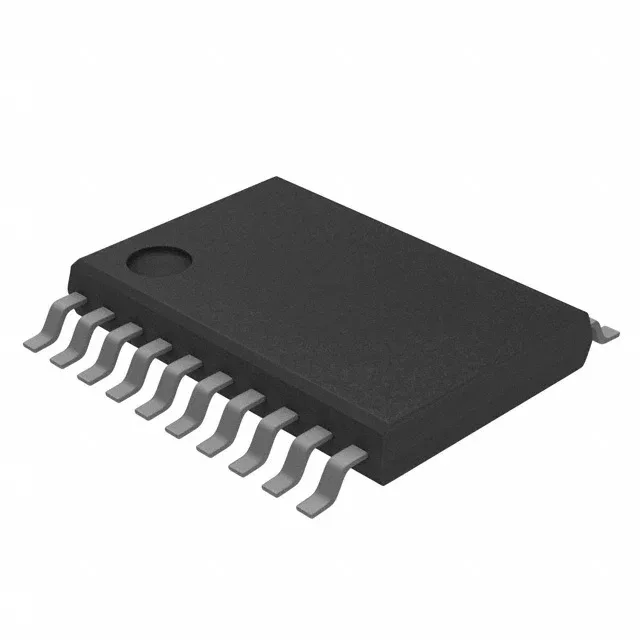
What this dual hot swap controller does on your backplane
The Texas Instruments TPS2301IPWG4 is a dual-channel hot swap controller in a 20-TSSOP package. It lets you insert a card into a live backplane without glitching the rail — the inrush current gets shaped by the programmable slew rate, and the circuit breaker trips if the load pulls past the threshold. No internal switch here; you pair it with external N-channel MOSFETs sized for your load current. Two channels means you can sequence two independent rails — say 5V and 3.3V — with a single controller, saving board space over two separate hot swap ICs. The 5 µA supply current keeps the always-on housekeeping power negligible. The supply range accepts 3V to 13V on one channel and 3V to 5.5V on the other, matching common backplane voltages.
Programmable protection — what you can set
Three programmable features give you control over the insertion event: circuit breaker threshold, fault timeout, and output slew rate. The circuit breaker sets the overcurrent trip point; the fault timeout decides how long the controller waits before declaring a fault; the slew rate ramps the output voltage to limit inrush. UVLO is built in — the part stays off until the input rail crosses the undervoltage threshold, then enables the gate drive. Latched fault means once the breaker trips, the controller stays off until you cycle power or toggle the enable — no automatic retry. That is the right behaviour for a backplane where a persistent short needs human intervention, not a power-cycle race.
ROHS3 compliant, so it passes current European and Asian environmental directives.