Protection set — what it covers and what it does not
This part includes current limiting (fixed, not adjustable), over-temperature shutdown, and undervoltage lockout (UVLO). That means if a downstream short or overload pulls more than 500 mA, the switch limits the current and eventually shuts off if the die gets too hot. It also has a status flag output that goes low when a fault is active — useful for a microcontroller interrupt or a simple LED indicator. There is no reverse-current protection, so if the load side goes above the input, current can flow backward through the body diode.
Supply and logic — no Vcc needed
The enable inputs are non-inverting and work with standard logic levels. Because the input type is non-inverting, a logic high turns the corresponding output on. The ratio of inputs to outputs is configurable: one input drives two outputs (1:2) and the other input drives the third output (1:1), giving you independent control of a dual-load channel and a single-load channel.
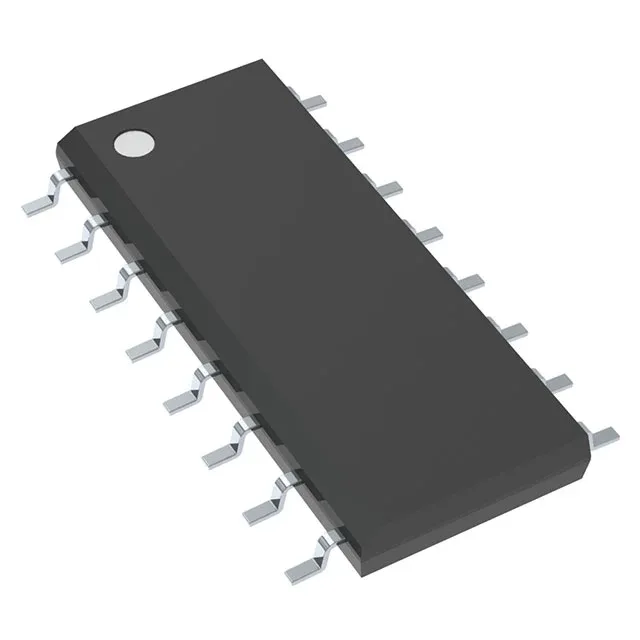
It is surface-mount in a standard 16-SOIC footprint, so rework with a hot-air station is straightforward — no lab bench required. The package is 3.90 mm wide, which is the narrow SOIC width, so check your PCB footprint if you are swapping from a wider body.
If you need a dual-sourcing option, TI also makes the TPS2053BDR in the same package, but there is no pin-compatible second source from another manufacturer listed in the records.