160 MHz Cortex-R4F — what the clock buys you
The 160 MHz core speed sets the timing budget for your control loop. The Cortex-R4F is a real-time control processor with a floating-point unit, so that clock translates to deterministic loop closure for motor control, braking systems, or powertrain management.
Memory map and peripheral set for an automotive ECU
With 1.25 MB of Flash, 192 KB of RAM, and 64 KB of EEPROM, this part can hold a substantial firmware image — enough for a full AUTOSAR stack or a custom motor-control algorithm with data logging. The 64 KB EEPROM block is separate from the Flash, so you can write calibration parameters or fault codes without wearing the program memory. The peripheral set includes CAN, LIN, SPI, I2C, SCI, and a MibSPI (multi-buffered SPI for high-throughput sensor reads). There are 64 general-purpose I/O pins and a 24-channel 12-bit ADC. The DMA and PWM modules handle the real-time data movement and actuator drive without loading the core.
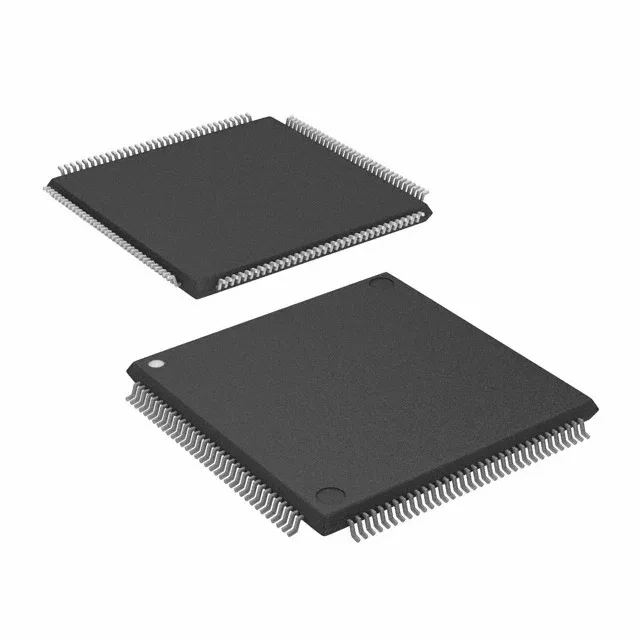
Package and temperature grade — 144-LQFP at 125°C
The 144-pin LQFP (20x20 mm) is a hand-solderable package — no BGA rework station needed.
Lifecycle and sourcing — still active, no LTB risk
For a new design, this means you can qualify it without worrying about an imminent end-of-life. The part is ROHS3 compliant.