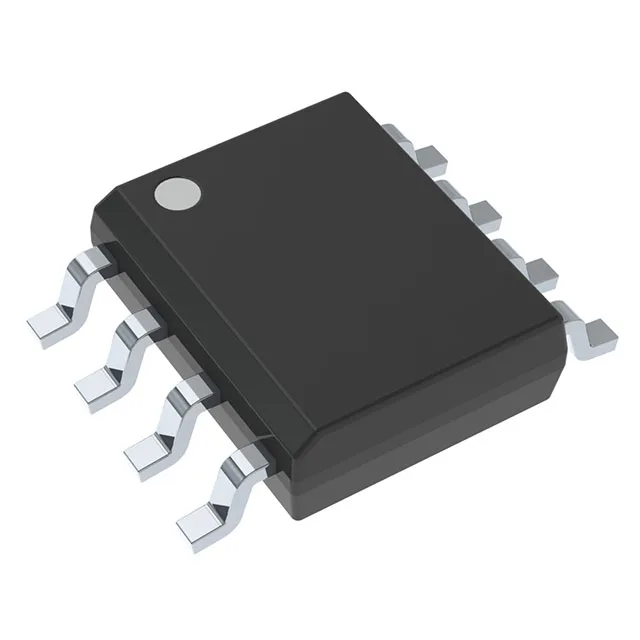
It measures both AC and DC current bidirectionally up to 5.75 A, with a sensitivity of 400 mV/A and a bandwidth of 80 kHz. The ±0.5% accuracy and ±0.05% linearity make it suitable for motor-drive phase monitoring, power-supply output sensing, and battery-charger current loops where galvanic isolation is needed without a separate isolator.
Maximum supply draw is 6 mA.
Bandwidth and response time — what they buy you
The 80 kHz bandwidth covers the switching frequency of most motor drives and power converters, so you see the ripple waveform, not just the DC average. The 6.5 µs response time means the output settles within one or two PWM cycles — fast enough for overcurrent detection in a drive's firmware loop, but not fast enough for a hardware trip on a sub-microsecond fault. If you need a hardwired desaturation or fast-trip comparator, you'd add an external comparator ahead of this sensor's output.
No special clearance or slot in the PCB is needed — the Hall-effect die inside the package provides isolation through the mould compound, not through an air gap.