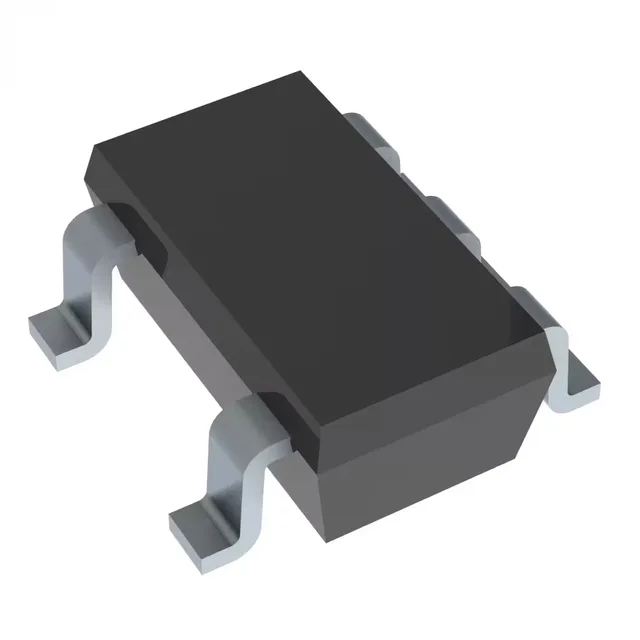
Texas Instruments TLV8541DBVR — Logic ICs

TLV8541DBVR TI General Purpose Op-Amp, 8 kHz GBW, 550 nA

MPNTLV8541DBVR
End of Life

Texas Instruments TLV8541DBVR, General Purpose op-amp, single circuit, 8 kHz gain bandwidth, 550 nA supply, rail-to-rail output, 1.7 V to 3.6 V supply, SOT-23-5 package, -40°C to 125°C.

$0.68Ref. price · indicative, final on quote
PackagingSC-74A, SOT-753
StockContact for availability
MOQ1 pcs
  • 100% new & originalTraceable channels only — no refurbs, no pulls, no remarked parts.
  • Date & lot codes on quoteStated per line before you commit; label photos on request.
  • MSL-compliant ESD packingMoisture-sealed bags with indicator cards; reels photo-verified.
  • PayPal buyer protectionPay by T/T, PayPal or Payoneer — card payments covered end to end.

Specifications

TLV8541DBVR Technical Specifications
ParameterValue
Output typeRail-to-Rail
Mounting typeSurface Mount
Amplifier typeGeneral Purpose
Voltage - input offset310 µV
Voltage - supply span3.6 V
Current - supply550nA
Current - input bias0.1 pA
Operating temperature-40°C ~ 125°C (TA)
Gain bandwidth product8 kHz
PackageTape & Reel (TR); Cut Tape (CT)
Slew rate0.0035V/µs
CaseSC-74A, SOT-753
Number of circuits1

Product details

It is built for battery-powered and always-sensing applications where every nanoamp matters: portable instruments, IoT sensor nodes, wearable health monitors, and remote industrial transmitters that run for years on a coin cell. The gain-bandwidth product sits at 8 kHz, so this is not a part for audio or high-speed signal chains; it is sized for DC and low-frequency conditioning — thermocouple amplifiers, photodiode front-ends, battery-voltage dividers, and comparator-threshold buffers.

8 kHz gain bandwidth — the signal-frequency ceiling

The 8 kHz gain-bandwidth product sets a practical limit on the closed-loop bandwidth. At a gain of 10, the usable signal bandwidth is about 800 Hz; at unity gain, you get the full 8 kHz. That is enough for a 1 kHz sensor filter with some headroom, but not for a 10 kHz PWM buffer or a switching-regulator error amplifier. The slew rate of 0.0035 V/µs reinforces the same message — this is a slow, low-power part, and the signal edges will be gentle. If your design needs to pass a 1 kHz square wave cleanly, check the slew-rate limit against your output swing.

The rail-to-rail output lets you use the full supply swing, so on a 1.8 V rail you still get a useful output range. Input offset is 310 µV typical — fine for DC accuracy in most sensor conditioning, but not a precision amplifier for microvolt-level signals.

Temperature grade and package

The package is a 5-pin SOT-23 (SOT-753 / SC-74A) — surface-mount, small, and easy to hand-solder with a fine tip if you are prototyping or doing field rework. No thermal pad to worry about; the dissipation is low enough that the plastic body handles it.

Frequently asked questions

What is the supply current of TLV8541DBVR?

The supply current is 550 nA typical — this is the part's defining low-power spec, making it suitable for always-on battery-powered designs.