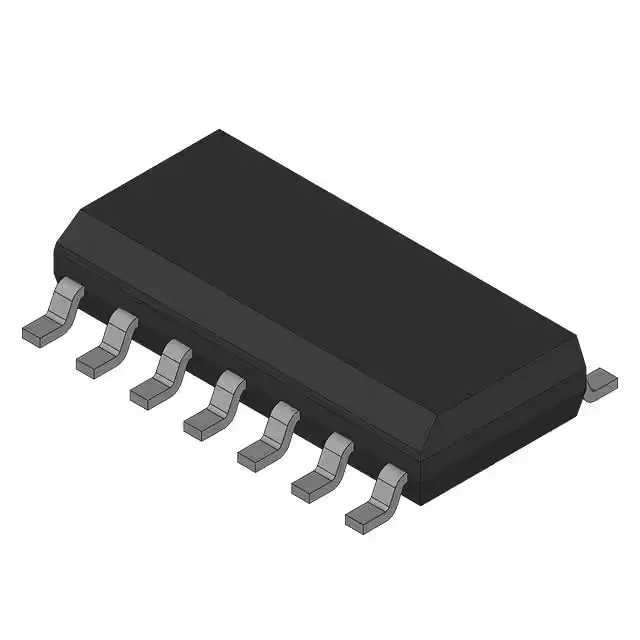
Texas Instruments TLV4113CDR — Logic ICs

TLV4113CDR Dual Op-Amp, 2.7 MHz, 320 mA Output, 14-SOIC

MPNTLV4113CDR
End of Life

Texas Instruments TLV4113CDR, Dual General-Purpose Op-Amp, 2.7 MHz Gain Bandwidth, 1.57 V/µs Slew Rate, Rail-to-Rail Output, 320 mA per Channel, 14-SOIC, 0°C to 70°C.

$0.67Ref. price · indicative, final on quote
Packaging14-SOIC (0.154", 3.90mm Width)
StockContact for availability
MOQ1 pcs
  • 100% new & originalTraceable channels only — no refurbs, no pulls, no remarked parts.
  • Date & lot codes on quoteStated per line before you commit; label photos on request.
  • MSL-compliant ESD packingMoisture-sealed bags with indicator cards; reels photo-verified.
  • PayPal buyer protectionPay by T/T, PayPal or Payoneer — card payments covered end to end.

Specifications

TLV4113CDR Technical Specifications
ParameterValue
Output typeRail-to-Rail
Mounting typeSurface Mount
Amplifier typeGeneral Purpose
Voltage - input offset175 µV
Voltage - supply span2.5 V
Current - supply700µA (x2 Channels)
Current - input bias0.3 pA
Current - output (Channel)320 mA
Operating temperature0°C ~ 70°C
Gain bandwidth product2.7 MHz
PackageBulk
Slew rate1.57V/µs
Case14-SOIC (0.154\", 3.90mm Width)
Number of circuits2

Product details

What the TLV4113CDR brings to the bench

Its headline feature is the 320 mA output current per channel — far more than the typical 20–60 mA most general-purpose op-amps deliver, which makes it the part you reach for when the load isn't just another ADC input but something that needs real drive, like a headphone speaker, a small solenoid, or a valve-control line. The 2.7 MHz gain-bandwidth product and 1.57 V/µs slew rate place it firmly in the general-purpose class, not high-speed signal processing. Output is rail-to-rail, so it swings close to the supply rails under moderate load. Supply range runs from 2.5 V to 6 V, and quiescent current is 700 µA per amplifier pair.

320 mA output — the spec that changes the BOM

Most dual op-amps in this package size top out around 60 mA output. The TLV4113CDR's 320 mA per channel means you can eliminate a separate buffer or driver stage when the load is a low-impedance transducer, a audio headphone jack, or a relay coil. If the board lives in a motor drive enclosure or under a car hood, you need the industrial or automotive grade sibling instead.

Supply voltage and rail swing

The 2.5 V minimum supply means it runs from a single lithium cell or a 3.3 V rail with headroom. The 6 V maximum covers standard 5 V logic rails. Rail-to-rail output lets the signal swing within millivolts of the supply under light load; at 320 mA the swing pulls back a bit, but still better than a standard bipolar output stage. Input common-mode range is not rail-to-rail — the datasheet typical limit is 1.1 V below the positive rail — so watch that on high-side sensing circuits at 3.3 V single supply.

Lifecycle and sourcing posture

The 'Bulk' package designation on this listing means it ships in tubes or loose units, not Tape & Reel — fine for prototyping, rework, or low-volume production, but if your pick-and-place line expects a reel, check the TLV4113IDR variant which typically ships in Tape & Reel.

Frequently asked questions

Can TLV4113CDR be used with a 3.3V supply?

Yes. The supply range is 2.5 V to 6 V, so a 3.3 V rail is well within spec. The rail-to-rail output will swing close to 3.3 V under light load, but at the full 320 mA output expect some drop from the rail.

Is TLV4113CDR a replacement for TLV4113IDR?

The TLV4113IDR is the Tape & Reel variant of the same die; the 'C' and 'I' denote the temperature grade. They are pin-compatible and functionally identical, but the temperature range differs — confirm your environment before substituting.

What is TLV4113CDR's listed slew rate?

The slew rate is 1.57 V/µs. Combined with the 2.7 MHz gain-bandwidth product, this is a general-purpose amplifier, not suited for high-speed or video applications.