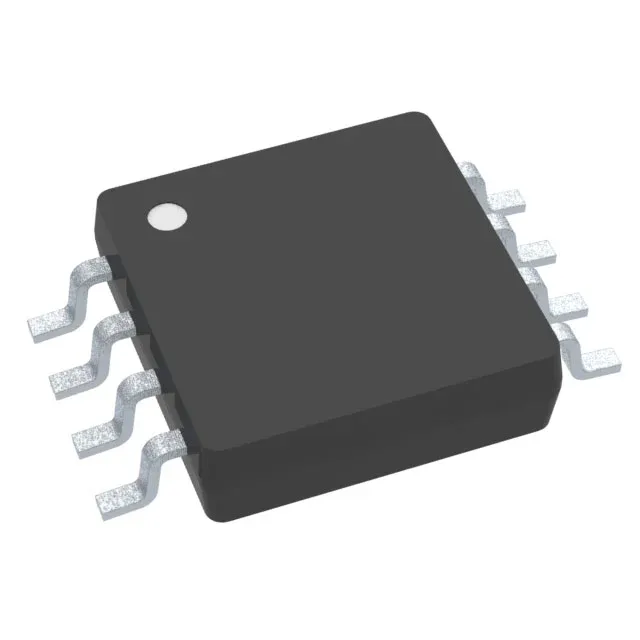
What this dual op-amp brings to the bench
The 160 kHz gain-bandwidth product sets the usable signal bandwidth: expect closed-loop gain flatness up to roughly 16 kHz at a gain of 10, or 160 kHz at unity gain. If your application filters or amplifies signals above that, this isn't the part — step up to a 1 MHz or faster op-amp. Input bias current of 1 pA (typical) makes the TLV27L2IDGK a natural fit for high-impedance sources like photodiode transimpedance stages or pH probe buffers, where bias current flowing through the source resistance would otherwise create a voltage offset that swamps the signal. No AEC-Q100 rating is listed, so for automotive designs requiring formal grade qualification, verify the specific variant or use a qualified alternative.
Supply span from 2.7 V to 16 V covers common single-supply rails: 3.3 V, 5 V, 12 V. For heavier loads, buffer the output with a transistor stage.