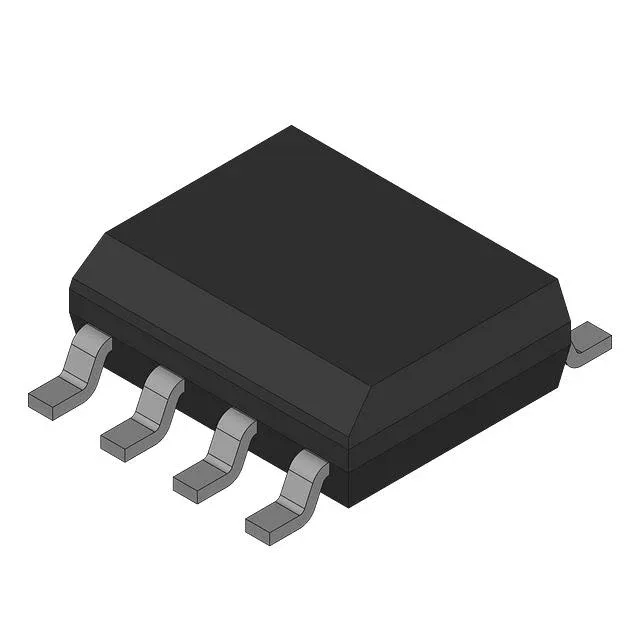
Texas Instruments TLV2760IDR — Logic ICs

Texas Instruments TLV2760IDR General Purpose Op-Amp, 500 kHz

MPNTLV2760IDR
End of Life

Texas Instruments TLV2760IDR, General Purpose Amplifier, 1 Circuit, Rail-to-Rail Output, 500 kHz Gain Bandwidth, 0.23 V/µs Slew Rate, 20 µA Supply, 8-SOIC Package, -40°C to 85°C.

$0.47Ref. price · indicative, final on quote
Packaging8-SOIC (0.154", 3.90mm Width)
StockContact for availability
MOQ1 pcs
  • 100% new & originalTraceable channels only — no refurbs, no pulls, no remarked parts.
  • Date & lot codes on quoteStated per line before you commit; label photos on request.
  • MSL-compliant ESD packingMoisture-sealed bags with indicator cards; reels photo-verified.
  • PayPal buyer protectionPay by T/T, PayPal or Payoneer — card payments covered end to end.

Specifications

TLV2760IDR Technical Specifications
ParameterValue
Output typeRail-to-Rail
Mounting typeSurface Mount
Amplifier typeGeneral Purpose
Voltage - input offset550 µV
Voltage - supply span3.6 V
Current - supply20µA
Current - input bias3 pA
Current - output (Channel)10.2 mA
Operating temperature-40°C ~ 85°C
Gain bandwidth product500 kHz
PackageBulk
Slew rate0.23V/µs
Case8-SOIC (0.154\", 3.90mm Width)
Number of circuits1

Product details

Low-power general-purpose op-amp for battery-operated and sensor-front-end designs

It draws just 20 µA of quiescent current while delivering a 500 kHz gain-bandwidth product and a 0.23 V/µs slew rate — enough bandwidth for low-frequency sensor conditioning, battery monitoring, and portable instrumentation. Input bias current is 3 pA, so it can interface directly with high-impedance sources like photodiodes or pH electrodes without an external buffer.

At 500 kHz GBP, this part is not for video or high-speed data acquisition. It is sized for signals below about 50 kHz — think thermocouple amplifiers, pressure-sensor bridges, battery fuel-gauge current-sense circuits, and audio-frequency active filters. The 0.23 V/µs slew rate limits full-power bandwidth to roughly 36 kHz at 1 V output swing, so plan for that if you need to reproduce fast edges. The trade-off is the 20 µA supply: a 3.5 MHz part like the TLV9351IDCKR would burn 600 µA, which kills battery life in an always-on sensor node.

The rail-to-rail output lets you swing within a few millivolts of each rail, which matters when your ADC reference is the supply itself. Input offset is 550 µV typical — adequate for 8- to 10-bit systems but not precision metrology; if you need sub-100 µV offset, step up to a zero-drift amplifier.

Frequently asked questions

Is TLV2760IDR obsolete?

No. The TLV2760IDR is listed as Active by Texas Instruments with ROHS3 compliance. There is no discontinuation notice or last-time-buy window in effect.

Is TLV2760IDR a rail-to-rail op amp?

The input common-mode range is not rail-to-rail — it extends from the negative rail to about 1 V below the positive rail.