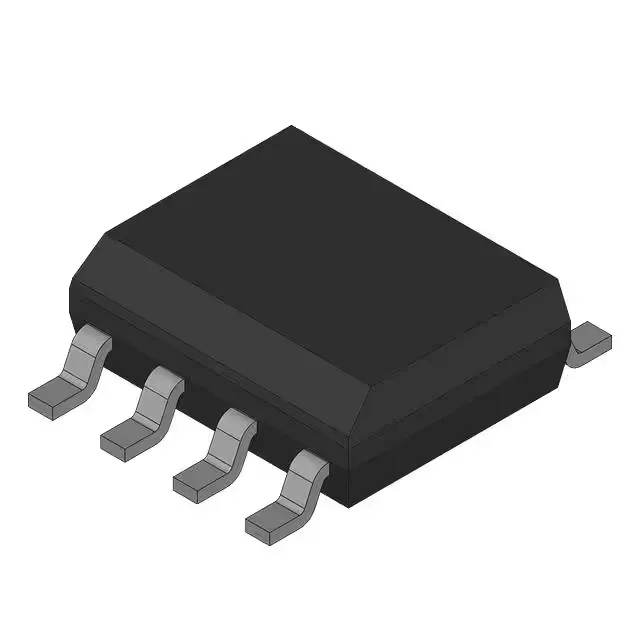
1 µA supply op-amp for battery-tethered signal chains
The rail-to-rail output stage lets it swing close to the supply rails in single-supply designs running from 2.5 V to 12 V. Typical applications include battery monitors, portable instrumentation, and sensor front-ends that spend most of their time in sleep or low-duty-cycle operation.
The 5.5 kHz GBW and 0.002 V/µs slew rate are the two numbers that tell you where this part belongs. For a 1 V peak output swing, the full-power bandwidth is roughly 300 Hz — above that, the slew rate limits the output and distortion climbs. If your signal is a temperature sensor output, a strain-gauge bridge, or a photodiode current that changes slowly, the TLV2241CDR is a clean fit. If you need to amplify a 10 kHz PWM ripple or a fast comparator edge, the part will round the corners and you will lose timing. The 600 µV input offset voltage is typical for this power class — not precision, but adequate for a 12-bit system with a reference above 2.5 V.
Package and temperature grade — design-in constraints
The input bias current is 100 pA typical, which keeps the DC error low when driving high-impedance sources like pH probes or photodiode amplifiers. Output current is rated at 200 µA per channel, enough to drive a microcontroller ADC input or a reference buffer, but not a relay coil or a headphone.