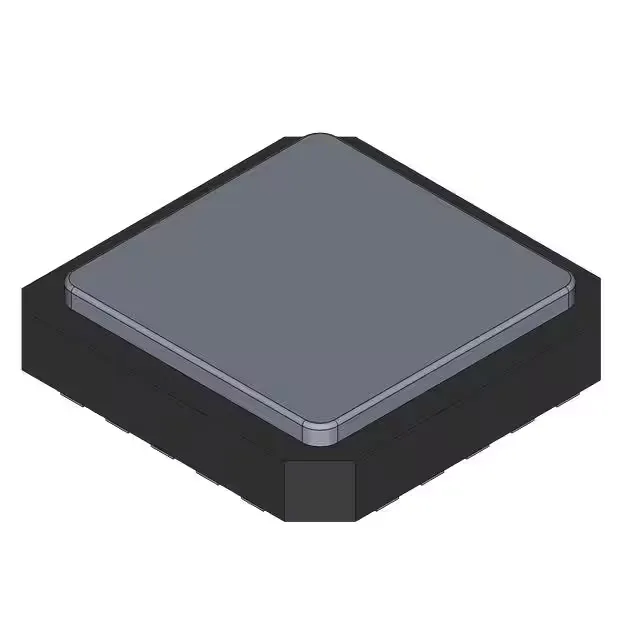
Package and temperature: designed for sealed, high-reliability assemblies
The 20-CLCC (ceramic leadless chip carrier) is a hermetic package — no plastic, no moisture absorption path. This matters for aerospace, avionics, and downhole tools where conformal coating alone isn't enough to block humidity. The supplier device package is 20-LCCC with an 8.89 x 8.89 mm footprint. Surface-mount assembly uses standard reflow profiles for ceramic bodies; the LCC lands on solder pads without leads, so inspect the fillet after reflow.
Supply voltage and output drive: 4 V to 40 V span, 40 mA per channel
Supply span from 4 V to 40 V means this quad op amp runs on a single 5 V rail, a 12 V automotive battery line, or a ±15 V split supply — no voltage regulator needed between the rail and the amplifier. The 1.05 mA total supply current (across all four channels) keeps the power budget under 1.1 mA, which is tight for a quad amplifier at this voltage range.
Input offset and bias: 120 µV offset, 33 nA bias
In precision DC-coupled circuits like thermocouple amplifiers or current-shunt monitors, the 120 µV offset sets the floor for the smallest detectable signal unless you calibrate. The 33 nA bias current is low enough that a 10 kΩ source impedance adds only 330 µV of additional offset error. For higher-impedance sources (100 kΩ or above), the bias-current-induced error will dominate, so this part fits best with source impedances under 50 kΩ.
This is not a last-time-buy or NRND part; Texas Instruments continues to manufacture it. The AEC-Q100 qualification is listed in the series field, so parts come from a production flow that has passed automotive-grade stress tests (preconditioning, accelerated operating life, temperature cycling, etc.).