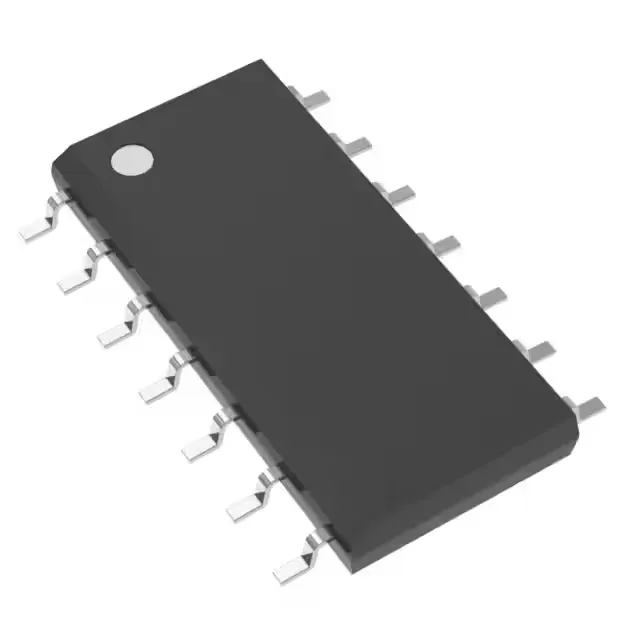
Texas Instruments TLC27L9ID — Logic ICs

TLC27L9ID Texas Instruments Op Amp, 110 kHz, 14-SOIC

MPNTLC27L9ID
End of Life

Texas Instruments LinCMOS™ TLC27L9ID, quad general-purpose op amp, 110 kHz gain bandwidth, 0.03 V/µs slew rate, 57 µA supply, 0.7 pA input bias, 4 V to 16 V supply, -40°C to 85°C, 14-SOIC.

$4.64Ref. price · indicative, final on quote
Packaging14-SOIC (0.154", 3.90mm Width)
StockContact for availability
MOQ1 pcs
  • 100% new & originalTraceable channels only — no refurbs, no pulls, no remarked parts.
  • Date & lot codes on quoteStated per line before you commit; label photos on request.
  • MSL-compliant ESD packingMoisture-sealed bags with indicator cards; reels photo-verified.
  • PayPal buyer protectionPay by T/T, PayPal or Payoneer — card payments covered end to end.

Specifications

TLC27L9ID Technical Specifications
ParameterValue
SeriesLinCMOS™
Mounting typeSurface Mount
Amplifier typeGeneral Purpose
Voltage - input offset1.1 mV
Voltage - supply span16 V
Current - supply57µA (x4 Channels)
Current - input bias0.7 pA
Current - output (Channel)30 mA
Operating temperature-40°C ~ 85°C
Gain bandwidth product110 kHz
PackageTube
Slew rate0.03V/µs
Case14-SOIC (0.154\", 3.90mm Width)
Number of circuits4

Product details

Quad op amp that sips 57 µA total

The CMOS input stage delivers 0.7 pA input bias current, so high-impedance sources like pH probes or photodiode front-ends see negligible leakage error. Gain bandwidth product sits at 110 kHz with a 0.03 V/µs slew rate, which limits the usable signal bandwidth to low-frequency signals — think DC measurement, temperature monitoring, or strain-gauge amplification, not audio or fast servo loops.

The 110 kHz gain-bandwidth product sets the closed-loop bandwidth at a given gain. At a gain of 100, the usable bandwidth drops to about 1.1 kHz. That is fine for slow analog signals — thermocouple outputs, pressure transducers, bridge amplifiers — but it will roll off a 10 kHz PWM ripple before the ADC sees it. The 0.03 V/µs slew rate means the output takes roughly 33 µs to swing 1 V; large-signal transients above a few hundred hertz will distort. Pair this op amp with a low-bandwidth SAR ADC or a delta-sigma converter running a few hundred samples per second, and the rail budget stays clean.

The 4 V minimum supply means it will not run from a single lithium cell (3.6 V nominal), but it works from a 5 V rail or a 9 V battery. Input offset voltage is 1.1 mV typical — adequate for 8- to 10-bit systems without autozero, but a precision application should budget for the offset error.

Temperature grade and package

Surface-mount only.

Lifecycle and sourcing

For dual-sourcing resilience, a pin-compatible alternative with higher bandwidth is the TLV9362IDDFR (10.6 MHz GBW, 2.6 mA supply, rail-to-rail output), but the supply-current difference is substantial — the TLC27L9ID is the low-power pick, not a performance substitute.

Frequently asked questions

Where can I buy TLC27L9ID?

Buyers need a reliable source with stock and competitive pricing to fulfill their BOM.

What is the datasheet for TLC27L9ID?

Design engineers require full electrical specs and pinout to verify fit.

What is the pinout of TLC27L9ID?

Crucial for layout and validation during design and replacement.

Is TLC27L9ID obsolete?

Lifecycle check prevents last-time buy surprises and ensures long-term availability.

What is the price of TLC27L9ID?

Sourcing buyers compare costs across distributors to meet budget targets.

What are the equivalent parts for TLC27L9ID?

Designers and buyers need drop-in replacements or alternatives for availability or cost optimization.