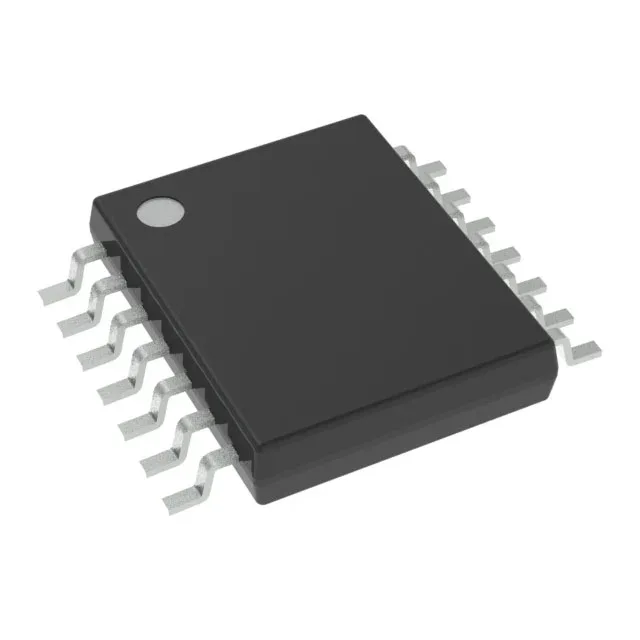
Quad CMOS op-amp built for micropower and high-impedance sensing
The 0.7 pA typical input bias current lets it interface directly with high-impedance sources like photodiodes, pH probes, or piezoelectric sensors without loading the signal. Gain-bandwidth product is 110 kHz, and the slew rate is 0.05 V/µs — these numbers tell you this is a micropower part, not a high-speed amplifier, so it belongs in slow-changing signal chains (temperature, pressure, strain) rather than audio or fast-control loops.
The TLC27L4CPW operates from a single supply spanning 3 V to 16 V, which covers everything from a 3.7 V Li-ion cell down to near-depletion to a 12 V industrial rail.
Output drive and offset — practical margins
Input offset voltage is 1.1 mV typical — not precision-grade, but adequate for general-purpose sensing where you can tolerate a few millivolts of DC error. If your application needs sub-millivolt accuracy, budget for a trim or look at a zero-drift amplifier instead.