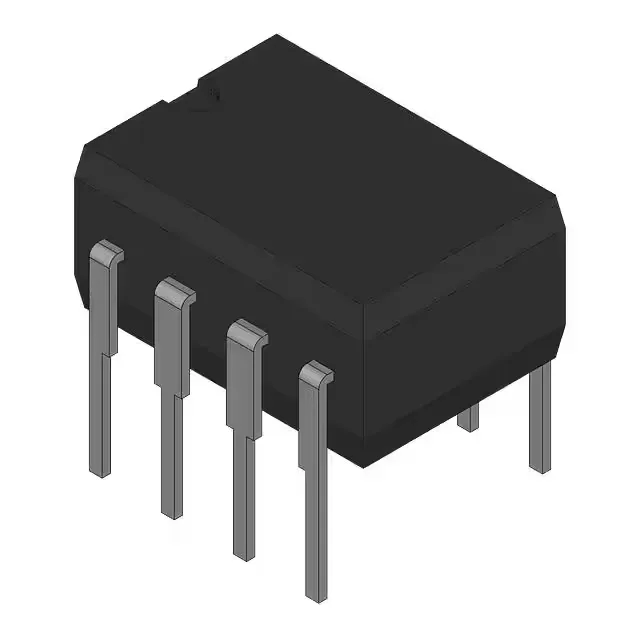
Texas Instruments TLC2262MJG — Logic ICs

TLC2262MJG CMOS Op-Amp, Dual Rail-to-Rail, 730 kHz

MPNTLC2262MJG
End of Life

Texas Instruments Automotive, AEC-Q100, LinCMOS™ TLC2262MJG, dual CMOS op-amp, rail-to-rail output, 730 kHz gain bandwidth, 0.55 V/µs slew rate, 4.4 V to 16 V supply, 425 µA/channel supply current, 8-CDIP through-hole package, -55 to 125°C military temperature range.

$3.91Ref. price · indicative, final on quote
Packaging8-CDIP (0.300", 7.62mm)
StockContact for availability
MOQ1 pcs
  • 100% new & originalTraceable channels only — no refurbs, no pulls, no remarked parts.
  • Date & lot codes on quoteStated per line before you commit; label photos on request.
  • MSL-compliant ESD packingMoisture-sealed bags with indicator cards; reels photo-verified.
  • PayPal buyer protectionPay by T/T, PayPal or Payoneer — card payments covered end to end.

Specifications

TLC2262MJG Technical Specifications
ParameterValue
SeriesAutomotive, AEC-Q100, LinCMOS™
Output typeRail-to-Rail
Mounting typeThrough Hole
Amplifier typeCMOS
Voltage - input offset300 µV
Voltage - supply span4.4 V
Current - supply425µA (x2 Channels)
Current - input bias1 pA
Current - output (Channel)50 mA
Operating temperature-55°C ~ 125°C
Gain bandwidth product730 kHz
PackageTube
Slew rate0.55V/µs
Case8-CDIP (0.300\", 7.62mm)
Number of circuits2

Product details

What the TLC2262MJG brings to a high-reliability BOM

This combination makes it a strong fit for sensor signal conditioning, actuator drive, and general-purpose analog processing in avionics, satellite, downhole instrumentation, and under-hood automotive electronics where board space is not constrained and through-hole assembly is acceptable.

Hermetic CDIP and military temperature range — the reliability angle

This matters for designs that face high humidity, outgassing environments, or long-life missions where moisture ingress into a plastic package would be a failure risk. The through-hole mounting means the part is hand-solderable and survives rework cycles better than a fine-pitch SMD, but it also means the board must accommodate leaded assembly; no pick-and-place for this one.

The TLC2262MJG operates from a single supply spanning 4.4 V to 16 V, or a split supply of ±2.2 V to ±8 V. The 4.4 V minimum means it will not run from a 3.3 V rail — you need at least a 5 V supply. The 16 V maximum covers standard 12 V automotive and 15 V industrial rails with margin. The rail-to-rail output swing is a real advantage when driving an ADC reference or a single-supply comparator input — you get the full signal range without a headroom penalty.

Package and mounting

The CMOS input stage gives a typical input bias current of 1 pA. That is essentially zero for most sensor circuits — you can use high-impedance dividers (megaohm range) without worrying about bias-current voltage errors. The input offset voltage is specified at 300 µV typical. For a precision DC application like a thermocouple amplifier or a strain-gauge bridge, that offset may need a nulling trim or a digital calibration step. The 730 kHz gain bandwidth and 0.55 V/µs slew rate are modest — fine for audio, slow sensor loops, and control signals up to a few tens of kilohertz, but not for video or high-speed data acquisition.

Lifecycle status and sourcing posture

The part is RoHS non-compliant (the CDIP package uses tin-lead plating), so it is exempt from RoHS restrictions for military, aerospace, and medical applications that still require leaded solder.

Frequently asked questions

Is TLC2262MJG automotive qualified?

Yes, the TLC2262MJG is listed under the Automotive, AEC-Q100 series, meaning it is qualified for automotive-grade reliability and production.

Is TLC2262MJG rail-to-rail output?

Yes, the output type is rail-to-rail, allowing the output to swing close to both supply rails.

What is the typical quiescent current per channel of TLC2262MJG?

The supply current is 425 µA per channel, for a total of 850 µA for both amplifiers.

What is the gain bandwidth product of TLC2262MJG?

The gain bandwidth product is 730 kHz.