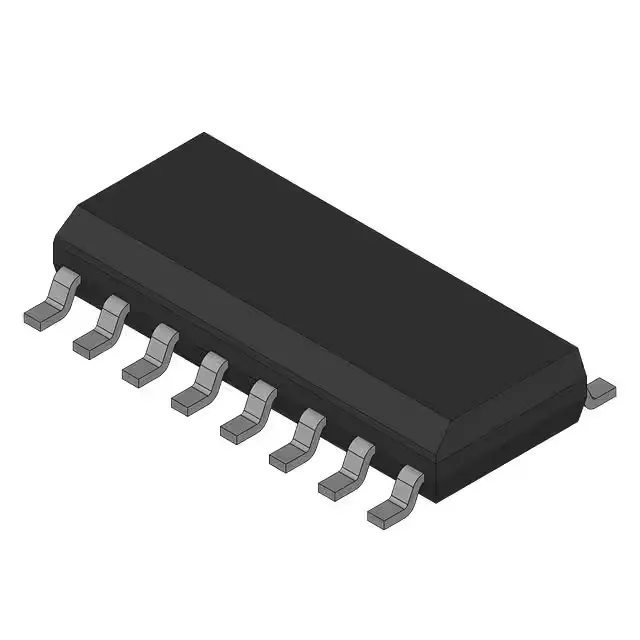
Texas Instruments TLC075ID — Logic ICs

TLC075ID Quad CMOS Op-Amp, 10 MHz GBW, AEC-Q100, 16-SOIC

MPNTLC075ID
End of Life

Texas Instruments TLC075ID, Automotive AEC-Q100, quad CMOS op-amp, 10 MHz gain bandwidth, 19 V/µs slew rate, 4.5-16 V supply, -40 to 125°C, 16-SOIC.

$1.47Ref. price · indicative, final on quote
Packaging16-SOIC (0.154", 3.90mm Width)
StockContact for availability
MOQ1 pcs
  • 100% new & originalTraceable channels only — no refurbs, no pulls, no remarked parts.
  • Date & lot codes on quoteStated per line before you commit; label photos on request.
  • MSL-compliant ESD packingMoisture-sealed bags with indicator cards; reels photo-verified.
  • PayPal buyer protectionPay by T/T, PayPal or Payoneer — card payments covered end to end.

Specifications

TLC075ID Technical Specifications
ParameterValue
SeriesAutomotive, AEC-Q100
Mounting typeSurface Mount
Amplifier typeCMOS
Voltage - input offset390 µV
Voltage - supply span4.5 V
Current - supply2.1mA (x4 Channels)
Current - input bias1.5 pA
Current - output (Channel)57 mA
Operating temperature-40°C ~ 125°C (TA)
Gain bandwidth product10 MHz
PackageTube
Slew rate19V/µs
Case16-SOIC (0.154\", 3.90mm Width)
Number of circuits4

Product details

AEC-Q100 quad CMOS op-amp for automotive signal chains

Each of the four amplifiers delivers a 10 MHz gain-bandwidth product and a 19 V/µs slew rate, which together support sensor amplification, active filtering, and ADC driver stages in 5 V and 12 V rail systems. The CMOS input stage keeps input bias current at 1.5 pA, preserving accuracy when interfacing with high-impedance sources like piezoelectric or thermopile sensors.

A 10 MHz gain-bandwidth product lets this part close a unity-gain loop with -3 dB bandwidth near that frequency; at a gain of 10, the closed-loop bandwidth drops to roughly 1 MHz. The 19 V/µs slew rate means a 10 V output step settles in about 0.5 µs, which keeps distortion low in the audio band and supports fast-settling multiplexed ADC front-ends. For a 5 V peak-to-peak output, the full-power bandwidth works out to around 600 kHz — above that, slew-rate limiting begins to clip the signal.

4.5 V to 16 V supply — rail compatibility

The supply span from 4.5 V to 16 V covers the common automotive battery rails (5 V regulated, 12 V nominal) and industrial 12 V supplies. At 4.5 V minimum, it still operates through cold-crank conditions on a 5 V rail. Each amplifier draws 2.1 mA typical supply current, totalling 8.4 mA for the quad package — a reasonable budget for a four-channel signal conditioning block.

The AEC-Q100 qualification adds the documentation trail that automotive and defence buyers need for PPAP submissions.

16-SOIC package — board integration

The quad-channel density packs four amplifiers into the same board area a dual op-amp would occupy in an SOIC-8, which cuts per-channel placement cost and board space in multi-stage analog front-ends. Supply decoupling with 0.1 µF ceramic per supply pin close to the package is the usual practice.

Frequently asked questions

Is TLC075ID a quad CMOS op-amp?

Yes, it is a quad-channel (four circuits) CMOS operational amplifier. The CMOS input stage gives it a very low 1.5 pA input bias current, suitable for high-impedance sensor interfaces.

What are the equivalents or substitutes for TLC075ID?

The closest functional peer is the TLV9362IDDFR, a dual-channel general-purpose op-amp with similar 10.6 MHz bandwidth and 25 V/µs slew rate, but in a smaller package and with only two channels. For a quad-channel rail-to-rail output alternative, the OPA4374AIPWT offers 6.5 MHz bandwidth and 5 V/µs slew rate, though with a lower 2.7 V minimum supply. Neither is a direct pin-compatible drop-in; the TLC075ID remains the primary AEC-Q100 quad CMOS option at this performance level.