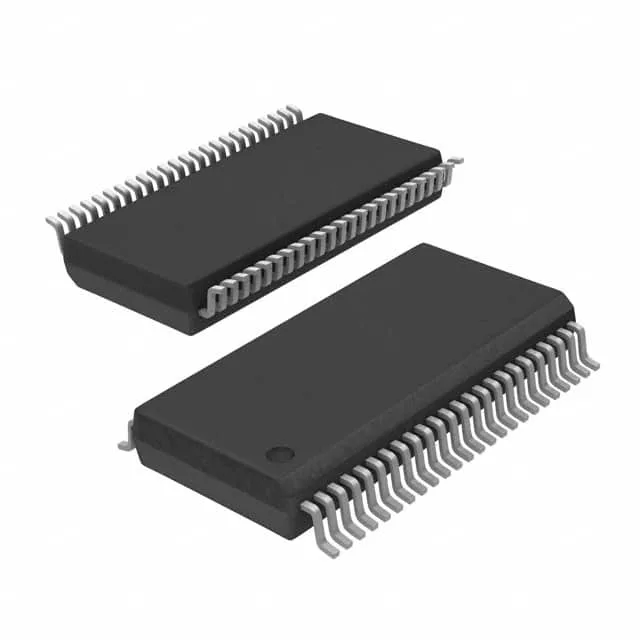
What this 16-bit buffer does on the bus
It sits between a bus master and a wide data or address bus, providing the drive strength to fan out to multiple loads while the 3-state control lets you isolate sections during test or power sequencing.
Output drive — 32 mA high, 64 mA low
The asymmetric drive — 32 mA sourcing, 64 mA sinking — is the spec that decides bus margin. That 64 mA low-level current handles heavily loaded lines like a memory address bus or a backplane trace with multiple receivers. If you are running a 50 Ω terminated line, check the voltage drop at 64 mA against the receiver's VIL threshold; the LVT family's bipolar-CMOS output stage holds a clean low level under load. The 3-state outputs float high-impedance when OE is deasserted, which is how you share the bus without contention.