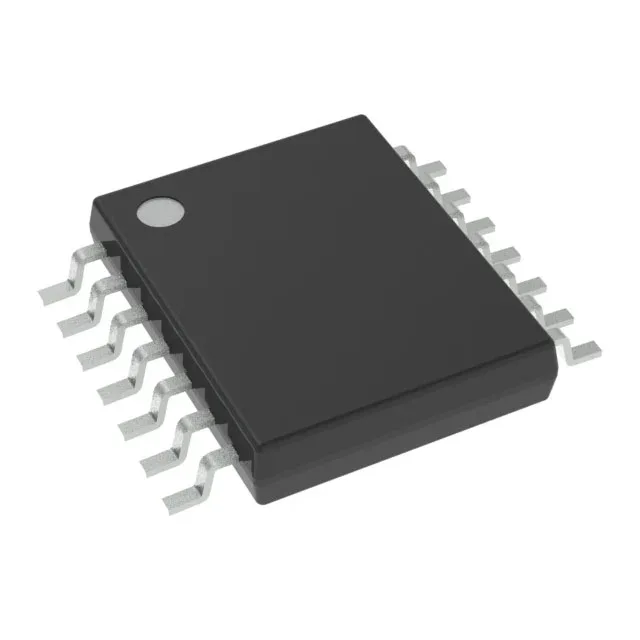
What this dual D-type flip-flop brings to a mixed-voltage board
It belongs to the 74LVC family, designed for 1.65V to 3.6V operation, which means it bridges 1.8V, 2.5V, and 3.3V logic rails without a separate level shifter — a common headache on multi-voltage boards where a 3.3V controller talks to a 1.8V sensor.
150 MHz clock and 5.2 ns propagation delay — the timing budget numbers
At 150 MHz maximum clock frequency, this flip-flop keeps up with fast serial interfaces and high-speed state machines. The 5.2 ns propagation delay at 3.3V with a 50 pF load is the number a layout engineer checks against setup and hold times — it leaves enough margin for most 100 MHz+ bus designs without forcing a faster (and pricier) logic family. Compare that to the 40 MHz ceiling and 25 ns delay of the SN74LS175NS at 5V — the 74LVC part is in a different speed tier, and it runs at lower voltage, which matters when your board's core rail is 3.3V or 1.8V.
No last-time-buy clock ticking, no scramble for surplus stock.
24 mA output drive — enough for standard loads without a buffer
Each output can sink or source 24 mA, which handles typical logic fan-out of ten LSTTL loads or drives a small LED indicator directly. The 10 µA quiescent current means it won't drain a battery-powered rail in sleep mode.