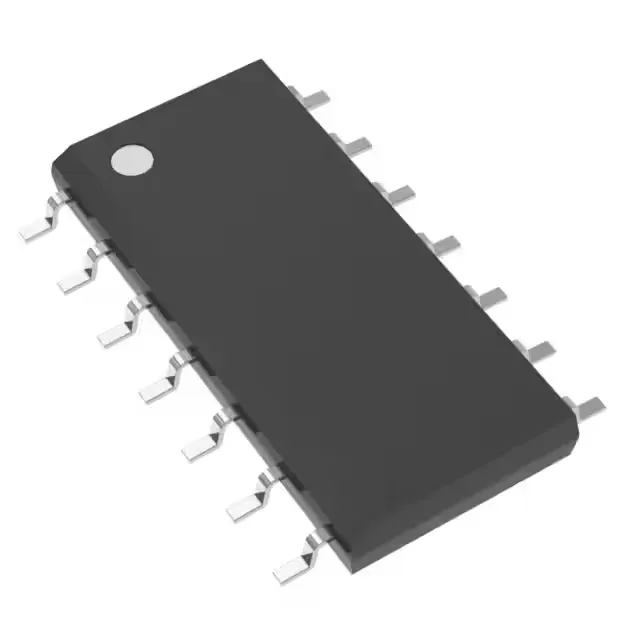
The Texas Instruments SN74LVC04ADR is a hex inverter — six independent NOT gates in a single 14-SOIC package. It belongs to the 74LVC family, which operates from 1.65V to 3.6V while maintaining 5V-tolerant inputs, making it a natural fit for mixed-voltage boards where a 3.3V core logic block interfaces with 1.8V peripherals or legacy 2.5V I/O. Each of the six inverters can sink or source 24 mA, enough to drive a standard CMOS input bank or a low-current LED directly.
4.3 ns propagation delay — how it affects your timing budget
The maximum propagation delay is 4.3 ns at 3.3V with a 50 pF load. That figure includes both temperature and voltage corners, so a typical design sees closer to 3 ns. For a 50 MHz clock distribution path, four series inverters eat about 17 ns — that is nearly one full clock period. Keep the inverter count low in timing-critical loops, or use a single-gate LVC part if you only need one channel. The delay is symmetrical within 0.5 ns between rising and falling edges, which matters for duty-cycle-sensitive signals like PWM or serial data.
Supply range and drive — what the 1.65V minimum means for your rail
At 1.8V the output drive drops to about 8 mA (typical), still enough for one or two CMOS loads. The 24 mA drive at 3.3V is symmetric, so the high and low levels have equal strength — no duty-cycle distortion from asymmetric drive. Quiescent current is 1 µA max, so it adds negligible standby draw in battery-powered designs.
For BOM resilience, the 74LVC family is second-sourced by multiple manufacturers (Nexperia, ON Semiconductor) with pin-compatible parts — qualifying an alternate now avoids a single-source lock-in later.