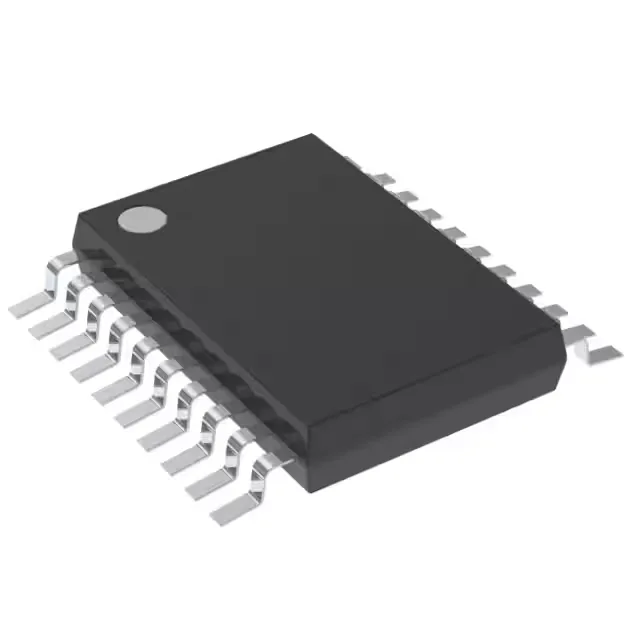
What this 8-bit flip-flop does on your board
The Texas Instruments SN74LV574ANSR is an 8-bit D-type flip-flop from the 74LV low-voltage CMOS family. It captures data on the positive edge of the clock and presents it through tri-state, non-inverted outputs — standard fare for register, latch, and bus-interface applications in industrial control, telecom, and test equipment where the bus needs to be isolated when the flip-flop is not selected. The 175 MHz clock frequency gives you a solid timing budget for 50-100 MHz bus cycles without worrying about hold-time violations on the backplane. The 2V to 5.5V supply range means it sits comfortably on a 3.3V or 5V rail — no level translator needed between this part and the rest of the 74LV or LVC logic on the board. The 20-SOIC package is a common footprint for 8-bit registers; the 0.209" body width fits standard SOIC-20 land patterns.
At 175 MHz the part can handle a 5.7 ns clock period. With a max propagation delay of 10.6 ns at 5V and 50 pF load, you are not running this at the clock limit in a synchronous bus — the propagation delay is the gating factor, not the toggle rate. What 175 MHz tells you is the flip-flop's internal setup/hold window is tight enough that it will not be the slow link in a 50 MHz data path. The real number to check is the 10.6 ns prop delay against your worst-case clock-to-Q timing budget. The 16 mA source/sink drive is enough to drive a 50 pF bus trace or a handful of CMOS inputs on the same backplane. If you are driving a longer trace or a heavier load, budget for a buffer or use the 74LVTH family with higher drive.
Lifecycle — active, no end-of-life watch needed
The 74LV series is a mature logic family, so the risk of a sudden EOL is low — TI typically gives 12-18 months notice on logic-family phase-outs.