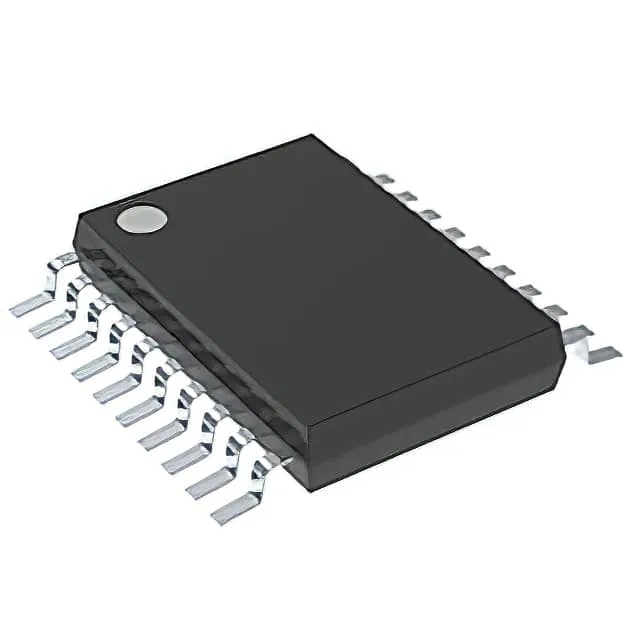
Texas Instruments SN74HC374PWT — DC-DC Power Modules

SN74HC374PWT D-Type Flip-Flop, 70 MHz, 20-TSSOP

MPNSN74HC374PWT
End of Life

Texas Instruments 74HC series D-type flip-flop, SN74HC374PWT, 8-bit, standard function, positive-edge triggered, tri-state non-inverted output, 70 MHz clock, 2V–6V supply, -40°C to 85°C, 20-TSSOP package.

$1.32Ref. price · indicative, final on quote
Packaging20-TSSOP (0.173", 4.40mm Width)
StockContact for availability
MOQ1 pcs
  • 100% new & originalTraceable channels only — no refurbs, no pulls, no remarked parts.
  • Date & lot codes on quoteStated per line before you commit; label photos on request.
  • MSL-compliant ESD packingMoisture-sealed bags with indicator cards; reels photo-verified.
  • PayPal buyer protectionPay by T/T, PayPal or Payoneer — card payments covered end to end.

Specifications

SN74HC374PWT Technical Specifications
ParameterValue
TypeD-Type
Series74HC
Output typeTri-State, Non-Inverted
Trigger typePositive Edge
Mounting typeSurface Mount
Voltage2V ~ 6V
Current - quiescent8 µA
Current - output high, low7.8mA, 7.8mA
Frequency70 MHz
Operating temperature-40°C ~ 85°C (TA)
PackageTape & Reel (TR); Cut Tape (CT)
FunctionStandard
Case20-TSSOP (0.173\", 4.40mm Width)
Input capacitance3 pF
Number of elements1
Number of bits per element8
Max propagation delay @ v, max CL31ns @ 6V, 50pF

Product details

70 MHz clock, 2V–6V supply — the bus-buffer choice

The SN74HC374PWT is a Texas Instruments 74HC-series octal D-type flip-flop with tri-state non-inverted outputs, positive-edge triggered, in a 20-TSSOP package. It clocks at 70 MHz, runs from 2V to 6V, and sinks or sources 7.8 mA per output. The wide supply range is the headline differentiator: it bridges 3.3 V and 5 V logic domains without a level translator, which is the main reason a designer picks 74HC over 74LS or 74F families. The -40°C to 85°C industrial temperature grade suits outdoor telecom, motor-drive control, and factory-automation backplanes — not just office equipment.

31 ns propagation delay — timing budget for the bus

Max propagation delay is 31 ns at 6 V supply and 50 pF load. That figure sets the data-to-clock setup window the upstream device must meet. If the driving logic has a 10 ns output hold time, the 31 ns delay leaves comfortable margin; if the upstream part is slower, you may need to stretch the clock period or switch to a faster logic family like 74F (the 74F374SCX-NS, for example, clocks at 140 MHz with 8.5 ns delay). The 3 pF input capacitance keeps the bus load light, so a single gate driver can fan out to several flip-flops without signal degradation.

Active, ROHS3, 20-TSSOP — sourcing posture

TI lists the SN74HC374PWT as Active with ROHS3 compliance. The 20-TSSOP footprint (4.40 mm width) is a common surface-mount package for board-level glue logic; it shares the same land pattern as many other 20-pin TSSOP bus buffers, so a second-source swap is straightforward if supply tightens.

Frequently asked questions

Is SN74HC374PWT RoHS compliant?

Yes, the SN74HC374PWT is listed as ROHS3 compliant.

What is the difference between SN74HC374PWT and SN74HCT374PWT?

The HCT variant has TTL-compatible input thresholds, while the HC variant uses CMOS thresholds. If the driving logic is 5 V TTL (e.g., 74LS or 74F), the HCT version guarantees a clean logic-high at 2.0 V input. The HC version requires the input to reach about 3.5 V at 5 V supply to guarantee a high, which is fine when the driver is another CMOS output.

Can SN74HC374PWT be used in high-speed applications?

The 70 MHz clock rate and 31 ns propagation delay suit moderate-speed bus buffering and register applications — think microcontroller address/data latching at 20–50 MHz bus speeds. For faster pipelines (above 100 MHz), consider the 74F374SCX-NS which clocks at 140 MHz with 8.5 ns delay.

Is SN74HC374PWT compatible with 5V logic?

Yes. The 2V–6V supply range includes 5 V operation. With a 5 V supply, the CMOS input thresholds are typically 3.5 V for a logic high and 1.5 V for a logic low, so it interfaces directly with 5 V CMOS outputs. For 5 V TTL outputs, the HCT variant is the safer choice.