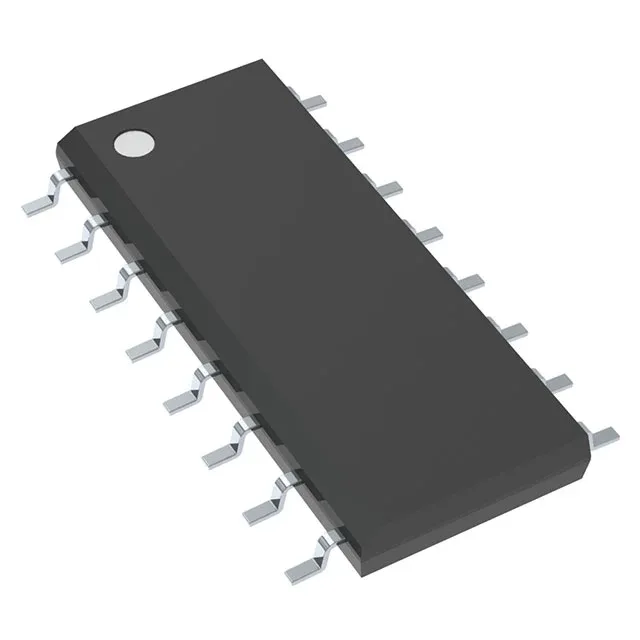
The SN74HC109DR is a dual JK flip-flop from TI's 74HC family, each element providing set (preset) and reset inputs with complementary outputs on a positive-edge clock. The 60 MHz clock frequency sets the maximum toggle rate for synchronous counters, shift registers, or state machines — enough for most 8-bit microcontroller bus interfaces and moderate-speed control logic. The 30 ns propagation delay at 6 V and 50 pF load gives a rough timing budget for daisy-chained stages.
Supply and temperature — where it lives
Runs from 2 V to 6 V, so it sits comfortably on either a 3.3 V or 5 V rail without a regulator or level shifter. Quiescent current is 4 µA typical, so it won't drain a battery-backed domain.
Housed in a 16-pin SOIC (3.90 mm width), surface-mount only. The supplier device package is 16-SOIC, so the PCB footprint matches standard SOIC-16 land patterns.