Single-bit buffer with Schmitt-trigger input for noise-prone rails
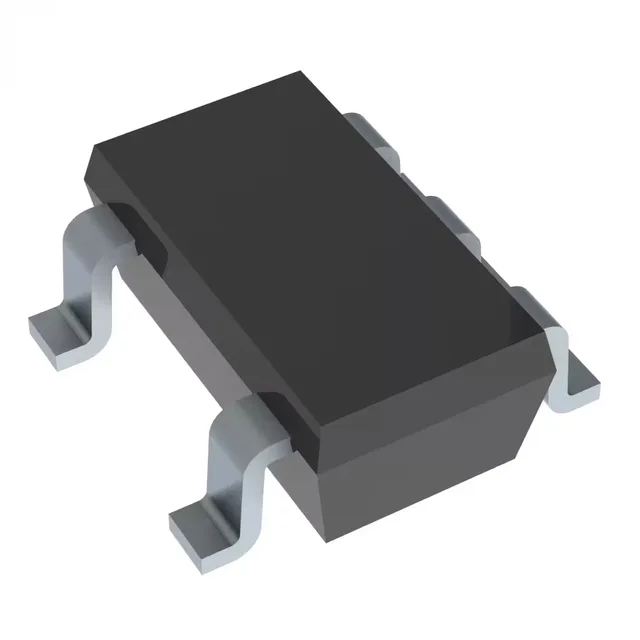
The Texas Instruments SN74AUP1G17DBVR is a single non-inverting buffer from the 74AUP low-power logic family. Its Schmitt-trigger input provides clean switching even on slow or noisy signal edges, making it a natural choice for debouncing pushbuttons, conditioning sensor outputs, or squaring up oscillator signals in battery-powered and portable gear. Housed in a 5-pin SOT-23-5, the part occupies minimal board area while remaining hand-solderable for prototype rework.
Supply voltage and temperature — fit for industrial and portable designs
It is not intended for heavy fan-out or line driving.
For dual-sourcing flexibility, the SN74LVC2G17QDCKRQ1 is a functionally similar dual buffer with automotive AEC-Q100 qualification and a wider temperature range (-40°C to 125°C), but it operates from a 1.65 V minimum supply and comes in a different footprint — verify the pinout before substituting.
This saves two passives and a board via per channel.