Inverting buffer with 3-state outputs for 5V bus isolation
It provides eight inverting channels arranged as two independent elements of four bits each, with a common output-enable control per element. The 3-state outputs allow the device to be placed in a high-impedance state for bus-oriented applications, effectively disconnecting the outputs from the bus when not selected. Operating from a 4.5V to 5.5V supply, this part is designed for 5V TTL or CMOS logic systems. It can source 15mA and sink 24mA per output, providing enough drive for standard logic inputs, LED indicators, or short PCB traces.
15mA source / 24mA sink — what the drive ratings mean for your bus
The 15mA output-high and 24mA output-low currents are typical for the ALS family and reflect a balanced drive capable of handling standard TTL fan-outs. For a typical LSTTL input requiring 20µA high and 0.4mA low, a single output can drive hundreds of loads. However, when driving capacitive loads like long PCB traces or ribbon cables, the AC switching current becomes the limiter, not the DC rating. The 3-state outputs also allow multiple buffers to share a common bus line without contention, as long as only one device is active at a time.
Active lifecycle — no end-of-life concern for current designs
20-SOIC wide-body footprint — layout considerations
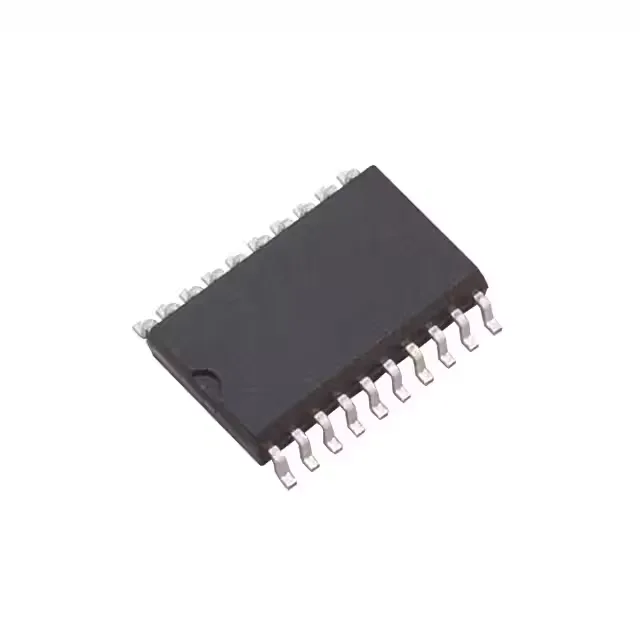
The device comes in a 20-SOIC wide-body package (0.295" body width, 7.50mm), which is a common footprint for octal buffers and transceivers. The wide body provides better thermal dissipation than the narrow SOIC variant, though at the drive currents this part handles, thermal concerns are minimal. The surface-mount package is suitable for automated assembly, and the Tape & Reel option (TR) is the standard for volume production. Cut Tape (CT) is available for prototyping or low-volume builds.