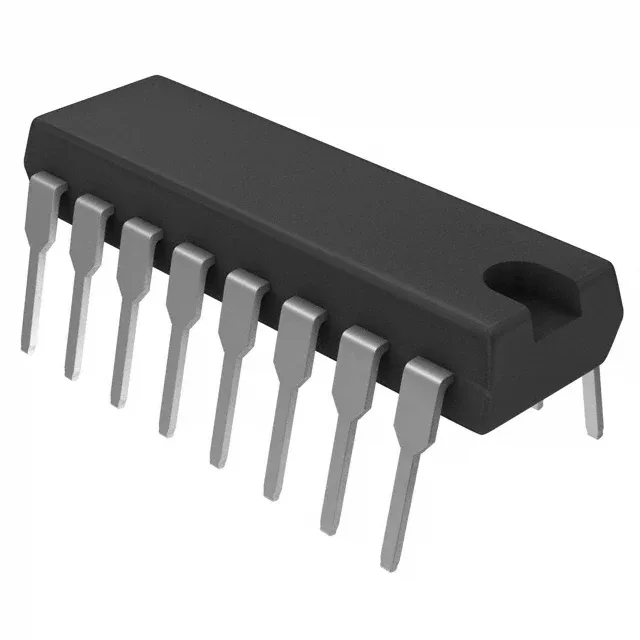
The Texas Instruments SN74ALS174N is a single-element 6-bit D-type flip-flop from the 74ALS family, clocked on the positive edge and featuring a master reset input that clears all six bits asynchronously. Outputs are non-inverted. It runs on a 4.5 V to 5.5 V supply and is rated for the commercial temperature range of 0°C to 70°C — typical for indoor logic boards, office equipment, and appliance control PCBs where the ambient stays inside a conditioned space.
50 MHz clock and 17 ns propagation delay — the timing margin
Rated for a maximum clock frequency of 50 MHz, with a propagation delay of 17 ns measured at 5 V into a 50 pF load. That 17 ns sets the window for data setup and hold relative to the clock edge — in a 50 MHz system (20 ns period), you have about 3 ns of slack after the clock-to-Q delay before the next edge arrives. That's tight but workable if the upstream logic is from the same 74ALS or 74F family. The 400 µA output high and 8 mA output low current are typical for ALS logic; they drive one or two standard TTL loads without a buffer, but don't expect to fan out to a dozen gates without seeing the edges round off.
Active production, ROHS3, no obsolescence concern
TI continues to run these parts for legacy industrial and commercial designs that need the 5 V logic interface.