What this 74ALS D-type does on the board
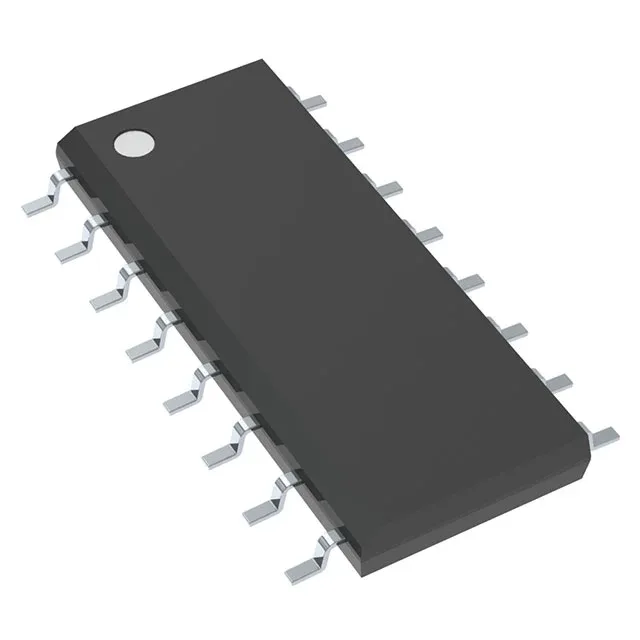
The Texas Instruments SN74ALS174D is a single-element, 6-bit D-type flip-flop with a master reset function, packaged in a 16-SOIC (3.90 mm width) for surface-mount assembly. It clocks on the positive edge of the clock input and presents a non-inverted output at each of the six Q pins. The master reset (MR) input asynchronously clears all flip-flops low, independent of the clock, which is useful for power-on initialization or emergency clear in a synchronous datapath. Operating from a 4.5 V to 5.5 V supply, this part is a drop-in for 5 V TTL logic systems where the 74ALS family's lower power consumption versus the original 74LS series is desired. The 19 mA quiescent current (Iq) is the standing draw on the 5 V rail, which matters when budgeting the total supply current for a multi-chip backplane or a densely populated logic card.
50 MHz clock and 17 ns propagation delay — timing budget decisions
The 50 MHz maximum clock frequency sets the upper bound for the synchronous data rate through this register. In a typical 5 V system, the 17 ns propagation delay (measured at 5 V supply with a 50 pF load) is the time from the clock edge to valid data at the Q output. This delay consumes part of the cycle budget for setup and hold timing of the downstream logic. If the next stage is another 74ALS device with similar propagation delay, the designer must account for the cumulative delay across the pipeline at 50 MHz. For comparison, the 74F174PC (a 74F-series peer) offers a 10 ns propagation delay at 80 MHz, but draws 45 mA quiescent current — more than double the 74ALS174D's 19 mA. The 74ALS174D is the choice when power budget matters more than raw speed, such as in a power-constrained 5 V logic card running at 25–40 MHz.
Output drive and fan-out
The output is rated for 400 µA source (high) and 8 mA sink (low). The 8 mA sink capability is typical for 74ALS and drives one or two standard TTL loads directly. For driving heavier loads (LEDs, relay coils, or long backplane traces), a buffer or line driver should follow the flip-flop output.
It is ROHS3 compliant.