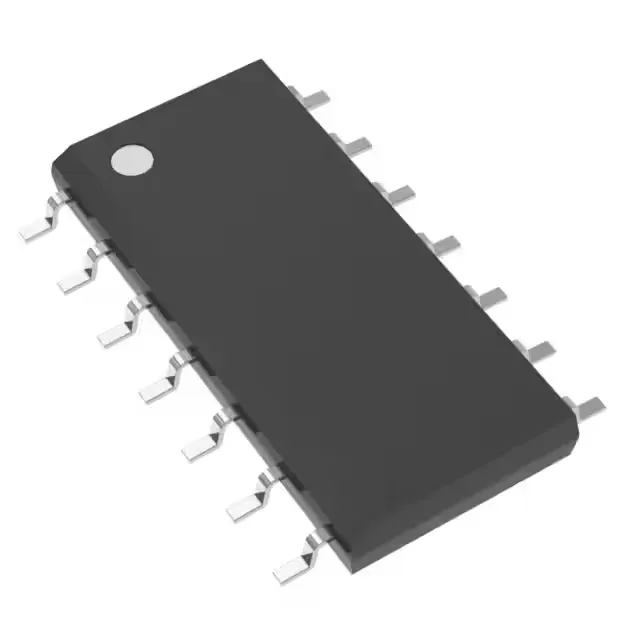
Six inverters in a 14-SOIC — what this part does on the board
The Texas Instruments SN7404D is a hex inverter from the 7400 TTL logic family. It packages six independent inverter gates — each with a single input and a standard totem-pole output — into a 14-SOIC (3.90 mm width) surface-mount package. The part runs from a 4.75 V to 5.25 V supply rail, the classic 5 V TTL window, with a propagation delay of 22 ns at 5 V into a 15 pF load. Typical use: signal polarity inversion, logic-level buffering, or oscillator building blocks on 5 V digital PCBs.
The 4.75 V to 5.25 V supply is tight — no margin for a droopy 5 V rail. If your system runs a regulated 5 V bus, this part fits. The 22 ns propagation delay at 5 V, 15 pF sets the clock-to-output ceiling for a single gate. In a daisy-chained inverter string for a ring oscillator or a clock buffer, that delay accumulates across six gates. The 12 mA quiescent current (max) is the total draw for all six channels; on a mixed-logic board with a dozen 7400-family parts, that quiescent sum adds up on the 5 V regulator budget.
Lifecycle — active, no LTB concern
The ROHS3 compliance covers current European and global RoHS exemptions — no special handling or exemption expiry to track.