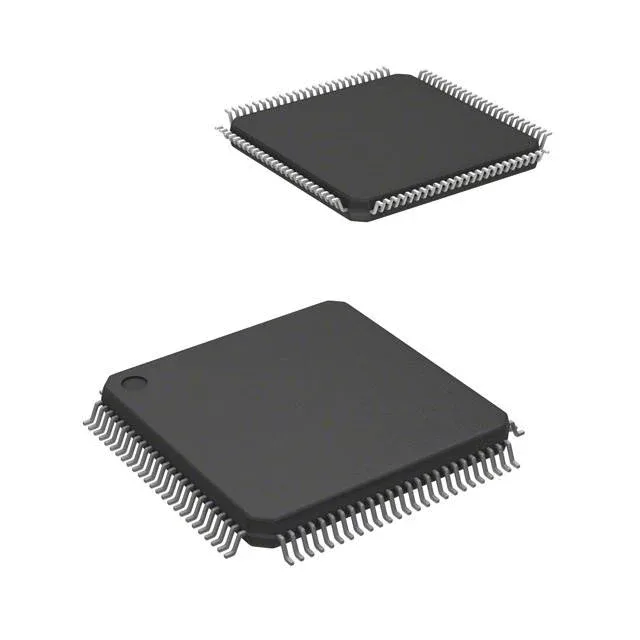
Texas Instruments MSP430FR60371IPZ — Microcontrollers & Processors (MCU / MPU / DSP)

TI MSP430FR60371IPZ MCU, 16-Bit, 16 MHz, 256 KB FRAM

MPNMSP430FR60371IPZ
End of Life

Texas Instruments MSP430FR60371IPZ, MSP430™ FRAM series, 16-bit MSP430 CPUXV2 @ 16MHz, 256KB FRAM / 8KB RAM, 18-channel 12-bit ADC, 76 I/O, 1.8V–3.6V supply, 100-LQFP (14×14mm), -40°C to 85°C, surface-mount tray.

$14.7873Ref. price · indicative, final on quote
StockContact for availability
MOQ1 pcs
  • 100% new & originalTraceable channels only — no refurbs, no pulls, no remarked parts.
  • Date & lot codes on quoteStated per line before you commit; label photos on request.
  • MSL-compliant ESD packingMoisture-sealed bags with indicator cards; reels photo-verified.
  • PayPal buyer protectionPay by T/T, PayPal or Payoneer — card payments covered end to end.

Specifications

MSP430FR60371IPZ Technical Specifications
ParameterValue
SeriesMSP430™ FRAM
Mounting typeSurface Mount
Oscillator typeInternal
Program memory typeFRAM
Voltage - supply (Vcc (Vdd))1.8V ~ 3.6V
Operating temperature-40°C~85°C(TA)
Speed16MHz
PackageTray
RAM size8K x 8
Core size16-Bit
PeripheralsBrown-out Detect/Reset, DMA, LCD, POR, PWM, WDT
ConnectivityI²C, IrDA, SCI, SPI, UART/USART
Number of i (O)76
Core processorMSP430 CPUXV2
Case100-LQFP
Data convertersA/D 18x12b
Program memory size256KB (256K x 8)

Product details

Typical applications include metering, industrial sensors, building automation, and portable instrumentation where FRAM's non-volatility and fast write endurance simplify data logging and firmware updates.

FRAM (ferroelectric RAM) is non-volatile like Flash but writes at bus speed with no erase cycle, and it handles 10^15 write cycles versus Flash's typical 10^4–10^5. For this MCU, that means you can treat the 256 KB program space like a unified memory — store calibration constants, logs, or over-the-air update staging without wear-leveling or a separate EEPROM. The 8 KB of conventional RAM handles stack and fast data buffers. The combination suits designs that need frequent non-volatile writes, such as energy meters or event recorders.

16 MHz core speed — timing budget

The 16 MHz clock rate is modest by today's MCU standards, but it is enough for most sensor polling, control loops, and communication tasks. The MSP430 CPUXV2 is a 16-bit RISC core with a hardware multiplier, so it handles 16-bit arithmetic efficiently. For applications like reading a 12-bit ADC at 200 ksps or running a PID loop at 10 kHz, the 16 MHz ceiling provides comfortable margin.

The 100-LQFP package (14x14 mm) has a 0.5 mm pitch, which is rework-friendly with a hot-air station — the leads are visible and accessible for inspection. The exposed pad on the bottom (if present) needs a thermal via pattern in the PCB layout for heat sinking, though at 16 MHz the dissipation is low.

Lifecycle and sourcing

For dual-sourcing or a pin-compatible drop-in, the MSP430FR6037x family shares the same footprint and peripheral set; check the specific RAM and FRAM density options in the series.

Frequently asked questions

What is the closest pin-compatible alternative to MSP430FR60371IPZ?

Within the MSP430FR6037x series, devices with different FRAM/RAM densities (e.g., 128 KB or 64 KB FRAM variants) share the same 100-LQFP footprint and peripheral set, offering a density-scaled drop-in alternative. Check the base product number MSP430FR60371 for the specific variant matrix.

Can MSP430FR60371IPZ be programmed with an MSP430 programmer?

Yes, the MSP430FR60371IPZ uses the standard MSP430 JTAG/SBW (Spy-Bi-Wire) interface, compatible with TI's MSP-FET, MSP-FET430UIF, and third-party programmers that support the MSP430 CPUXV2 core.