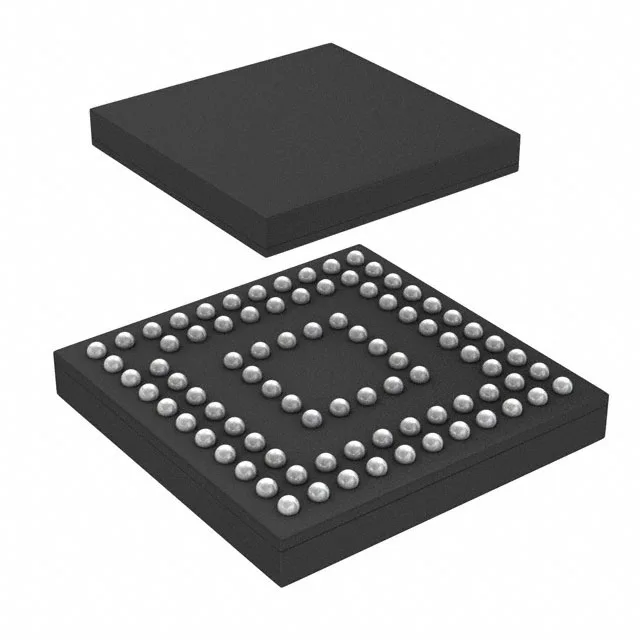
FRAM-based 16-bit MCU for low-power sensing and logging
The 16 MHz clock is enough for real-time sensor fusion and protocol handling; the 20-channel 12-bit ADC covers multi-sensor inputs without an external mux.
87-ball BGA — what the package means for the board
That shrinks the footprint to about a third of an LQFP-100, but it forces a four-layer minimum PCB with microvias or via-in-pad for the inner balls. The 68 GPIOs fan out from the BGA; routing density means you will likely need at least two signal layers. The 6x6 mm NFBGA variant is the same die in a slightly different substrate; the IRGZ suffix part shares the same pinout and can be used as a drop-in alternate if the supply channel shifts.
For a production BOM, this means you are not forced into a lifetime-buy calculation or a respin to a newer die. If you are qualifying this part for a new design, the active status gives you a multi-year procurement horizon before any end-of-life review would surface.
Peripheral set for sensor and control applications
The 68 I/O lines in the BGA package support parallel LCD interfaces or keypad matrices. The oscillator block works with external crystals or the internal trimmed oscillator.