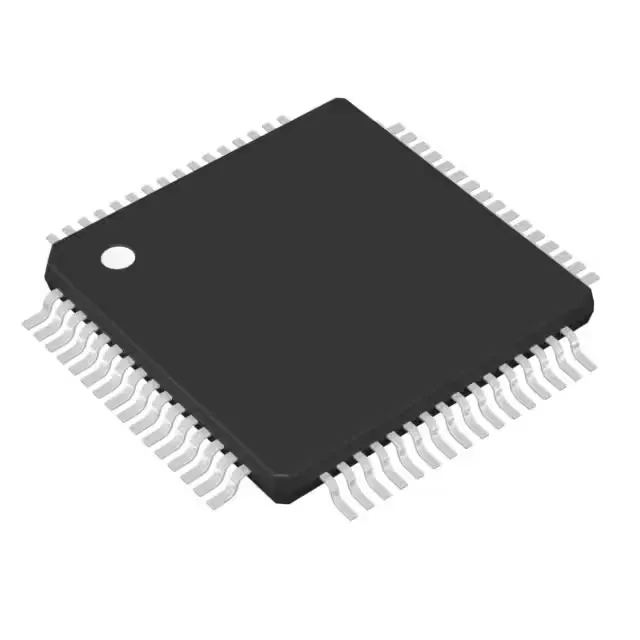
Texas Instruments MSP430FR5992IPMR — Microcontrollers & Processors (MCU / MPU / DSP)

TI MSP430FR5992IPMR 16-bit MCU, 128KB FRAM, 16MHz, 64-LQFP

MPNMSP430FR5992IPMR
Active

Texas Instruments MSP430™ FRAM MSP430FR5992IPMR, 16-bit MSP430 CPUXV2 core, 16MHz, 128KB FRAM, 8K x 8 SRAM, 54 I/O, 17x12b ADC, I²C/SPI/UART, 1.8V-3.6V, -40°C to 85°C, 64-LQFP.

$7.9300Ref. price · indicative, final on quote
StockContact for availability
MOQ1 pcs
  • 100% new & originalTraceable channels only — no refurbs, no pulls, no remarked parts.
  • Date & lot codes on quoteStated per line before you commit; label photos on request.
  • MSL-compliant ESD packingMoisture-sealed bags with indicator cards; reels photo-verified.
  • PayPal buyer protectionPay by T/T, PayPal or Payoneer — card payments covered end to end.

Specifications

MSP430FR5992IPMR Technical Specifications
ParameterValue
SeriesMSP430™ FRAM
Mounting typeSurface Mount
Oscillator typeExternal, Internal
Program memory typeFRAM
Voltage - supply (Vcc (Vdd))1.8V ~ 3.6V
Operating temperature-40°C~85°C(TA)
Speed16MHz
PackageTape & Reel (TR); Cut Tape (CT)
RAM size8K x 8
Core size16-Bit
PeripheralsBrown-out Detect/Reset, DMA, POR, PWM, WDT
ConnectivityI²C, IrDA, SPI, UART/USART
Number of i (O)54
Core processorMSP430 CPUXV2
Case64-LQFP
Data convertersA/D 17x12b
Program memory size128KB (128K x 8)

Product details

Active production, FRAM-based 16-bit MCU for industrial sensing

It combines 128 KB of FRAM program memory with 8 KB of SRAM, giving you unified non-volatile storage that writes at bus speed and draws negligible current in standby — a practical advantage over Flash for data-logging and over-the-air update buffers where every microamp counts. The built-in brown-out reset, POR, DMA, PWM timer, and watchdog timer cover the usual housekeeping blocks without external glue logic.

128 KB FRAM — what it changes for firmware and data storage

FRAM (ferroelectric RAM) is the headline feature here. Unlike Flash, FRAM writes at full bus speed with no erase-before-write cycle, so you can treat it as a unified memory for both code and data without wear-leveling. Endurance is effectively unlimited for normal product lifetimes — the datasheet typically quotes 10¹⁵ write cycles, which removes the sector-management overhead you would need on a Flash part. For a design that logs sensor data or stores calibration parameters frequently, this simplifies the firmware architecture and reduces the risk of write-disturb corruption.

64-pin LQFP — hand-solderable and rework-friendly

The MSP430FR5992IPMR comes in a 64-lead LQFP with a 10x10 mm body and 0.5 mm pitch. That is a standard footprint that reflows cleanly with a hot-air station or a reflow oven, and the leads are visible for inspection and touch-up. If you are prototyping or doing a low-volume build, this package is straightforward to hand-solder with a fine-tip iron and some flux.

TI lists the MSP430FR5992IPMR with an active product status as of the current data. The base product number MSP430FR5992 covers a range of package and temperature variants, so if you later need a different package or a wider temperature grade, the family has options without a core architecture change.

Frequently asked questions

What is the maximum clock speed of MSP430FR5992IPMR?

The MSP430 CPUXV2 core is rated for a maximum clock speed of 16 MHz. That is the core frequency; the FRAM and SRAM access times are matched to that speed with zero wait states for most operations, so you get deterministic instruction timing without the flash-wait-state tuning needed on some Flash-based MCUs.

How many pins does MSP430FR5992IPMR have?

The MSP430FR5992IPMR is packaged in a 64-lead LQFP. That gives you 54 general-purpose I/O pins plus the dedicated power, ground, oscillator, and programming pins.