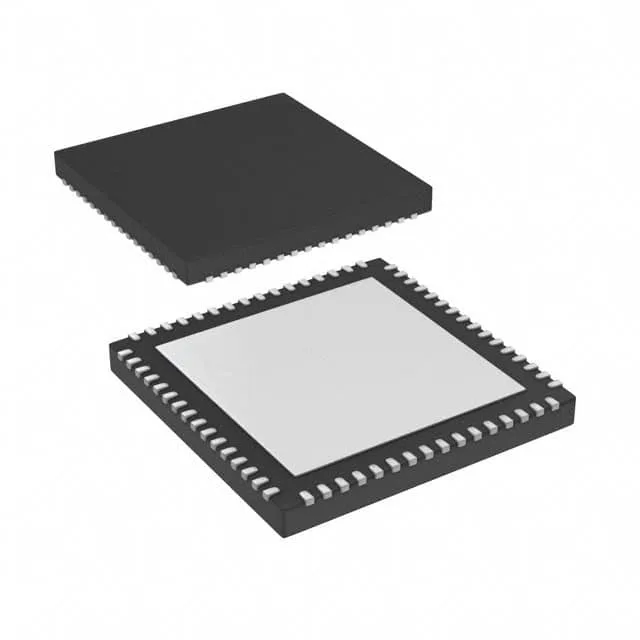
FRAM-based 16-bit MCU for low-power sensing and control
It packs 32 KB of FRAM program memory and 2K x 8 of SRAM, with 51 general-purpose I/O lines and an 8-channel 12-bit ADC. FRAM gives you non-volatile storage that writes at bus speed with essentially unlimited endurance — no EEPROM wear-out to budget for in firmware updates or data logging.
16 MHz CPU — enough for real-time loops, not for number crunching
The 16 MHz clock is the ceiling for this core. It handles sensor polling, PID loops, and protocol parsing without breaking a sweat, but you won't run heavy DSP or floating-point math here — that's not what this family is for. The FRAM lets you treat program memory like RAM for data structures, so you can log telemetry or store calibration tables without a separate EEPROM.
64-VQFN exposed pad — reworkable with care
The 64-VFQFN package (9x9 mm body) has an exposed thermal pad underneath. For rework, the standard hot-air profile for a 0.5 mm pitch QFN works — preheat the board to 150°C, then hit the package at 320°C until the solder reflows. The pad is large enough that you can lift the part without lifting the pad if you work the corners first.