128 KB FRAM — the non-volatile memory that writes like RAM
The 8K x 8 SRAM handles runtime data. This is the part to pick when your firmware needs frequent field updates or you want to log data without wearing out the memory array.
The 40 GPIOs give headroom for parallel interfaces or a modest keypad-and-display panel.
48-VFQFN with exposed pad — rework and layout notes
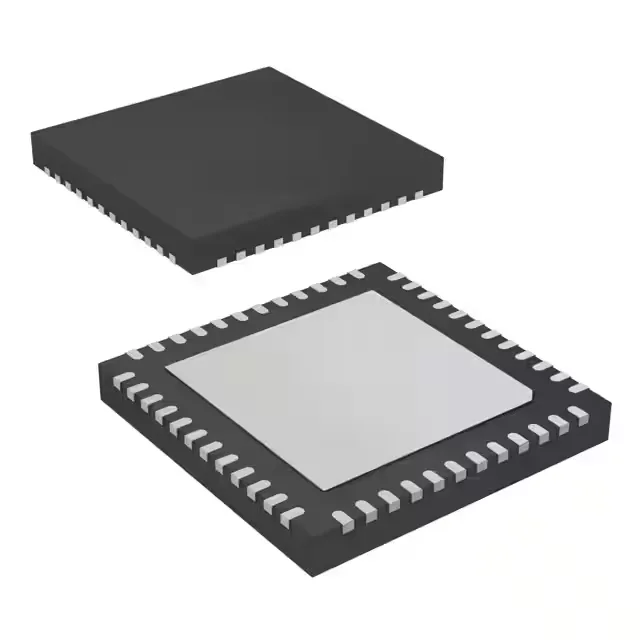
Housed in a 48-VFQFN (7x7 mm) with an exposed thermal pad. The pad needs a solid via-stitch to the ground plane — without it, the junction temp climbs fast above 60°C ambient under sustained ADC conversions. For rework: preheat the board to 125°C, hit the QFN with hot air at 320°C, and lift the part once the solder flows uniformly. The pad is center-ground, so reflow alignment is forgiving, but check the orientation dot — it's small on this package.
The FRAM technology draws near-zero standby current — the real power story is the active-mode current at 16 MHz, which stays under 300 µA typical in the family. That makes this MCU a strong candidate for battery-powered edge nodes where a 32-bit ARM would burn too much quiescent current.