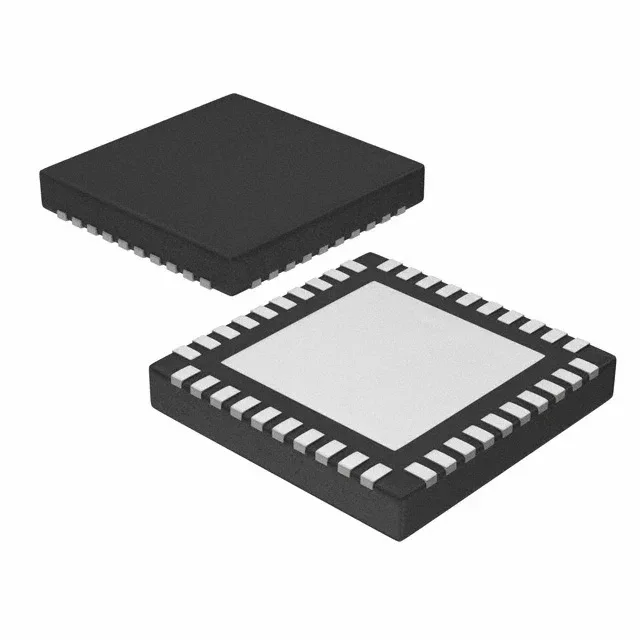
16 MHz MSP430 with 64 KB FRAM — the ultra-low-power workhorse
Its program memory is 64 KB of FRAM — a non-volatile memory that writes at bus speed, draws negligible power, and endures 10^15 read/write cycles, unlike Flash or EEPROM. On-chip SRAM is 2K x 8.
FRAM vs Flash: why the memory type matters for the BOM
The 64 KB FRAM program memory is the headline differentiator in this MSP430. FRAM writes at full bus speed without a page-erase cycle, so firmware updates over I²C or SPI complete in milliseconds rather than seconds. Standby current is lower than equivalently sized Flash because FRAM retains data without a charge pump. For designs that log data or store calibration constants, FRAM eliminates a separate serial EEPROM — a BOM simplification that saves board area and a dollar or more per unit at volume. The trade-off: FRAM density tops out lower than Flash in this family, so if the application needs more than 64 KB of code, you step up to a larger MSP430FR59xx variant.
TI has not issued a last-time-buy notice or end-of-life notification for this base product number.
Package and thermal: 40-VQFN with exposed pad
The MSP430FR5959IRHAT is supplied in a 40-VFQFN exposed-pad package, supplier device package 40-VQFN measuring 6x6 mm. The QFN footprint is compact — useful for space-constrained designs — but requires a solder stencil with appropriate aperture for the center pad to avoid voids. The part is surface-mount.