What this MSP430 FRAM MCU brings to a low-power BOM
It belongs to the MSP430™ FRAM family, where the program memory is 32 KB of FRAM — a non-volatile memory that writes at near-SRAM speed, consumes negligible power in standby, and supports over 10^15 write cycles. That makes it a direct replacement for designs that previously needed separate Flash and EEPROM, or that relied on battery-backed SRAM for data logging. On-chip SRAM is 1K x 8, enough for small stacks and temporary buffers. With 31 general-purpose I/O lines and an internal oscillator, it can run a sensor node or control loop without external clock components.
FRAM memory: why it changes the firmware and data-storage strategy
The 32 KB FRAM program memory is the headline feature. For a battery-powered data logger, that means you can store sensor readings to non-volatile memory on every sample without wearing out the memory or draining the cell. The 1K x 8 SRAM is modest — plan to use FRAM for both code and variable storage, keeping the SRAM for stack and interrupt context. The FRAM endurance is effectively unlimited for field updates, so over-the-air firmware upgrades are practical without worrying about sector wear.
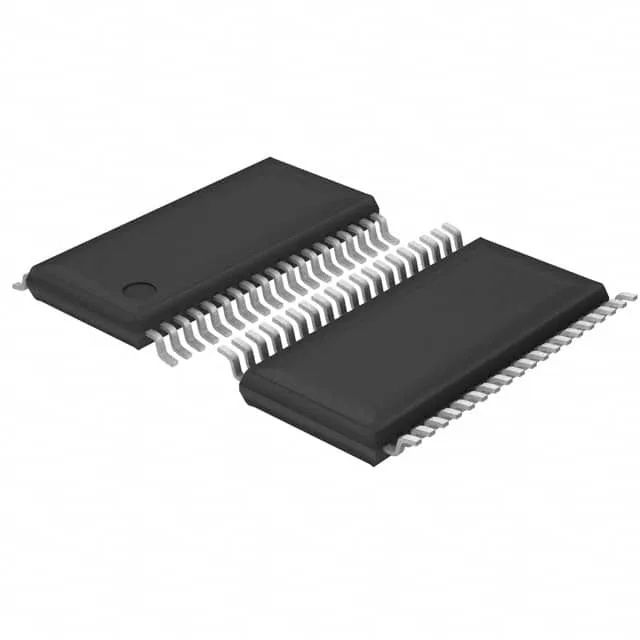
The 38-TSSOP package (0.240" body width, 6.10 mm wide) is a fine-pitch surface-mount footprint — standard for automated assembly, but the 0.5 mm lead pitch means the reflow profile needs care to avoid solder bridges.
For a BOM line, this part presents no imminent supply risk. The base product number is MSP430FR5957, and the series is MSP430 FRAM.