FRAM-based 16-bit MCU for power-conscious designs
It belongs to the MSP430 FRAM series, where the program memory is 64 KB of ferroelectric RAM (FRAM) — non-volatile, fast-write, and low-power, unlike conventional Flash. The 2 KB of SRAM handles runtime data. With 51 general-purpose I/O lines, an 8-channel 12-bit ADC, and serial interfaces covering I²C, IrDA, SCI, SPI, and UART/USART, this part targets sensor hubs, metering, and industrial control nodes where every microamp matters.
64 KB FRAM — no-write-endurance worry
FRAM writes at bus speed without erase cycles and endures over 10¹⁵ write cycles — orders of magnitude beyond EEPROM or Flash. For a design that logs data or stores calibration constants frequently, this eliminates wear-leveling overhead. The 2 KB SRAM is tight for large buffers; offload data to FRAM if needed.
16 MHz CPUXV2 — control-loop timing
The 16 MHz clock rate on a 16-bit RISC core delivers around 16 MIPS. For a PID loop or a sensor readout running at a few kilohertz, that is ample headroom.
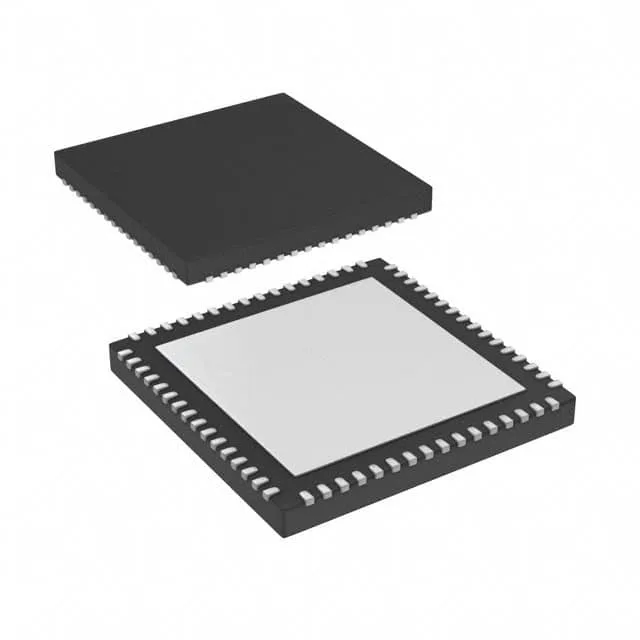
64-VQFN package — layout notes
No special reflow profile beyond the usual lead-free recipe.
TI lists the MSP430FR5872IRGCR as Active. The base product number MSP430FR5872 covers a range of density and package variants; if a future spin needs more memory, the pin-compatible MSP430FR59xx siblings are the natural migration path.