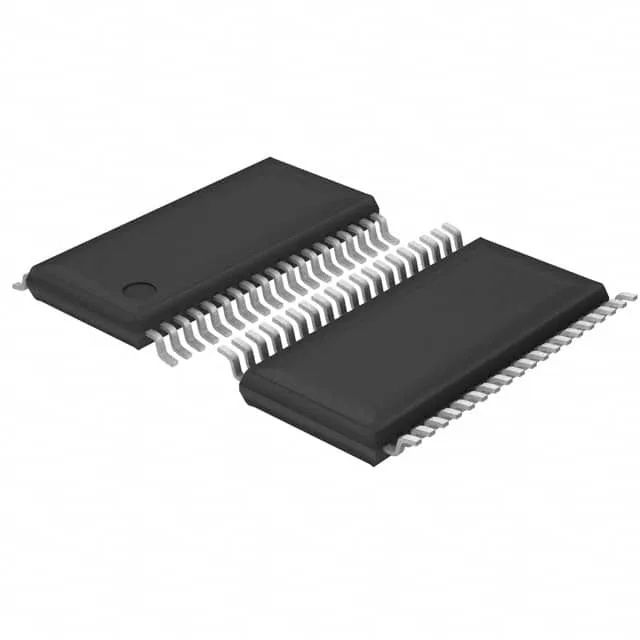
FRAM-based 16-bit MCU for low-power and data-logging designs
The 1 KB SRAM handles stack and scratchpad variables. The 38-pin TSSOP package brings out 31 general-purpose I/O lines.
The FRAM program memory is the differentiator here. Unlike a Flash-based MCU where every write requires a sector-erase cycle that draws milliamps for milliseconds, FRAM writes at SRAM speeds with microamp energy per byte. The 32 KB FRAM is unified, so you can allocate part to code and part to data at runtime, or use the full space for code if the data log lives on an external EEPROM. The 1 KB SRAM is modest; if your application needs a large frame buffer or protocol stack, budget accordingly.
The base product number is MSP430FR5857, so any future die revision or package variant will carry the same base code, making BOM tracking straightforward.
38-pin TSSOP — footprint and rework notes
The 38-TSSOP body measures 6.10 mm wide with a 0.65 mm pin pitch — a standard fine-pitch SMD footprint that routes easily on two-layer boards. The MSL rating for this package family is typically MSL-3, so if the moisture-barrier bag has been open longer than the floor-life window, a 24-hour bake at 125°C before reflow is the safe call.