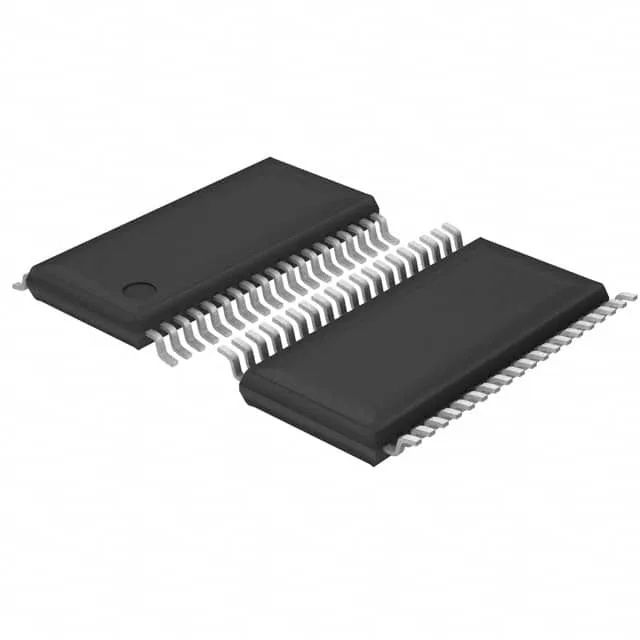
The 16 MHz clock rate supports sensor polling loops and control algorithms without the overhead of a higher-frequency core that burns more current. FRAM writes at bus speed — no erase cycle, no write-buffer wait — so a firmware update or data-log write completes in microseconds, not milliseconds. That matters for applications like smart meters or portable medical devices where a Flash write would stall the system or drain the battery. The 12-bit ADC with 12 channels covers multi-sensor analog front-ends, and the I²C, SPI, and UART interfaces handle common sensor and display modules. The 31 GPIOs in the 38-TSSOP package leave enough headroom for a small keypad, LED indicators, and a serial debug header.
End-of-life hot status; Texas Instruments has announced discontinuation. Evaluate a pin-compatible FRAM sibling for new designs.