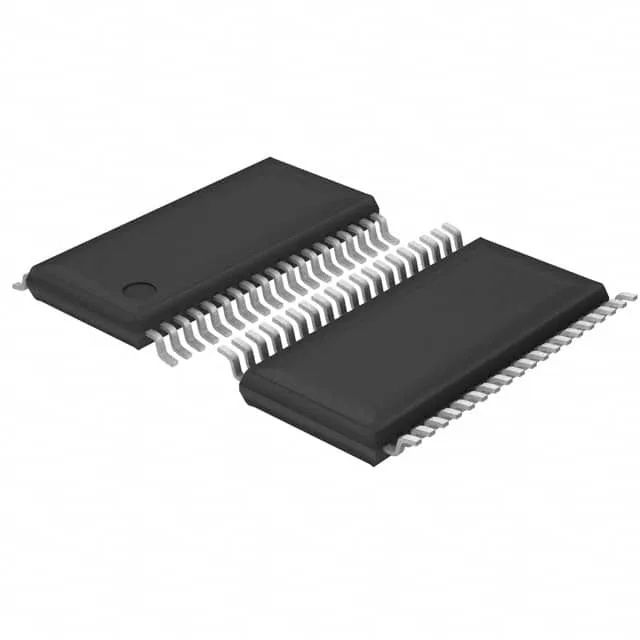
FRAM microcontroller for low-power sensing and control
38-TSSOP package — rework and layout notes
The MSP430FR5848IDAR comes in a 38-TSSOP package (0.240", 6.10 mm width) with a 0.65 mm pin pitch. It is a surface-mount part, and the fine pitch means the hot-air station needs a fine nozzle and steady hand to lift it without lifting pads. The package has no exposed thermal pad, so all heat dissipation goes through the leads — keep the copper pour under the part solid and use a thermal via grid to the ground plane if the load is continuous. The 31 I/O lines are distributed around the perimeter, making manual probing possible on a prototype board.
At the low end, the FRAM retains data without a retention voltage — it is non-volatile — so the system can power-cycle the MCU between readings and lose no state. This is the key advantage over SRAM-based MSP430 parts that need a backup battery.