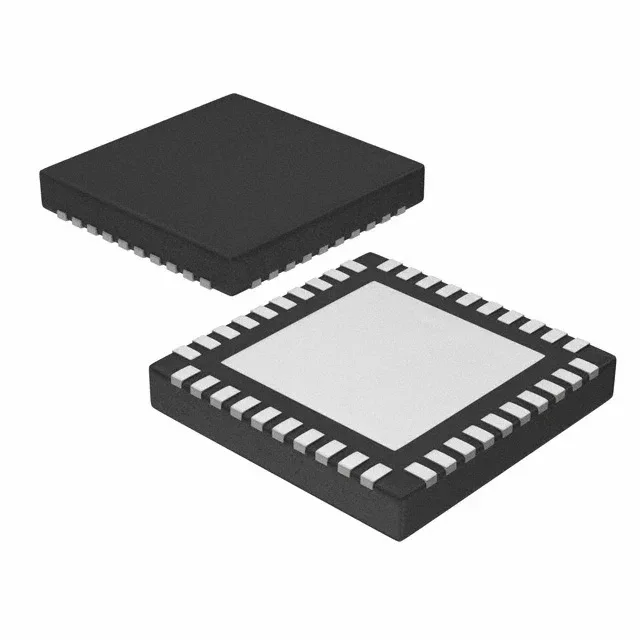
The 16 MHz clock rate on the 16-bit MSP430 CPUXV2 core sets the instruction throughput for this MCU. For a typical sensor-fusion or control loop, that translates to roughly 16 MIPS when running from FRAM at zero wait states — enough for real-time I²C/SPI polling, PWM updates, and 12-bit ADC conversions without a DMA bottleneck.
32 KB FRAM — unified memory that replaces Flash and EEPROM
The 32 KB FRAM (ferroelectric RAM) serves as both program memory and nonvolatile data storage. The 1 KB of SRAM handles stack and scratchpad.
Peripherals and I/O for mixed-signal designs
With 33 GPIOs, a 14-channel 12-bit ADC, brown-out reset, POR, PWM timer, and watchdog, this part handles sensor interface, motor control, and supervisory tasks without external glue logic.