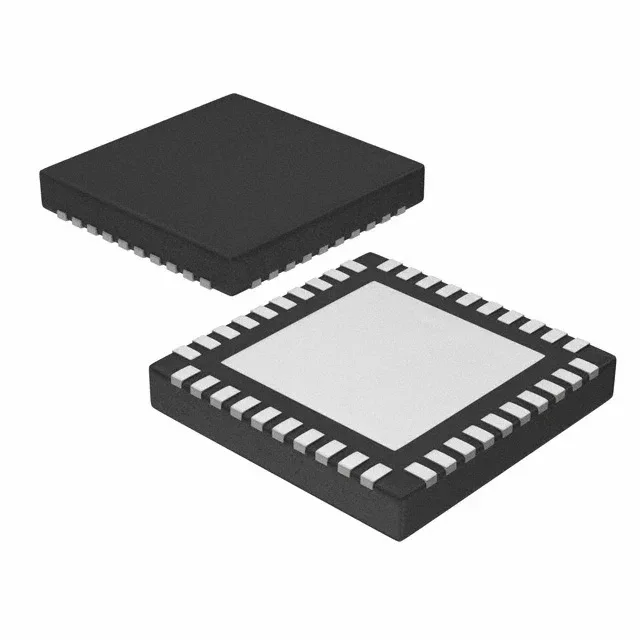
FRAM-based 16-bit MCU for low-power control
Its program memory is 32 KB of FRAM — a non-volatile memory that writes at bus speed, draws negligible write current, and eliminates the erase-before-write cycle of Flash. This makes it a strong fit for applications that log data, update firmware in the field, or wake frequently from sleep to take a sensor reading and go back to idle.
What the 16 MHz core and FRAM mean for the BOM
The 16 MHz clock rate is the CPU's maximum — enough for a control loop sampling at tens of kilohertz, a UART at 115200 baud, or a sensor hub polling I²C and SPI peripherals. The FRAM program memory is the headline feature: 32 KB of FRAM (32K x 8) means writes are fast and low-energy, so you can store calibration constants, configuration tables, or data logs directly in program space without wearing out the memory. The 1K x 8 RAM is modest — sized for stack and temporary variables, not large buffers.
Peripherals and I/O for sensor and actuator control
For BOM planning, this part presents no last-time-buy risk today.