FRAM memory — why it changes the design trade-off
Its standout feature is 16 KB of FRAM program memory — nonvolatile storage that writes at near-SRAM speed with virtually unlimited endurance, unlike Flash. This makes it a strong fit for applications that need frequent data logging, field-updatable firmware, or low-energy nonvolatile storage without the write-cycle worry of EEPROM. The device also integrates 1K x 8 RAM, 32 I/O lines, a 14-channel 10-bit ADC, and serial interfaces including I²C, SPI, UART, IrDA, and LINbus.
24 MHz core — where the speed matters
The 24 MHz clock is typical for the MSP430 FRAM series and balances throughput against the ultra-low-power profile. At this speed the CPUXV2 can handle sensor fusion loops, real-time control tasks, and communication protocol stacks without straining the power budget. For timing-critical applications, the clock tree can be driven from an external source if needed.
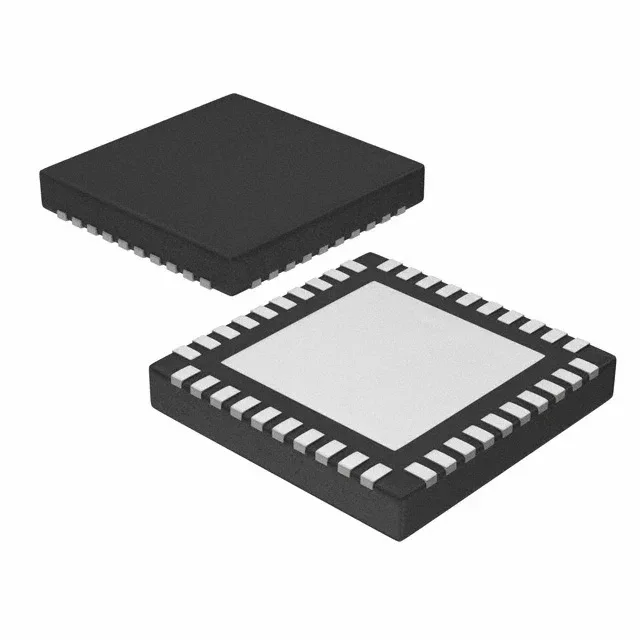
The 40-VQFN (6x6) package with exposed pad helps thermal dissipation in higher-current I/O scenarios.