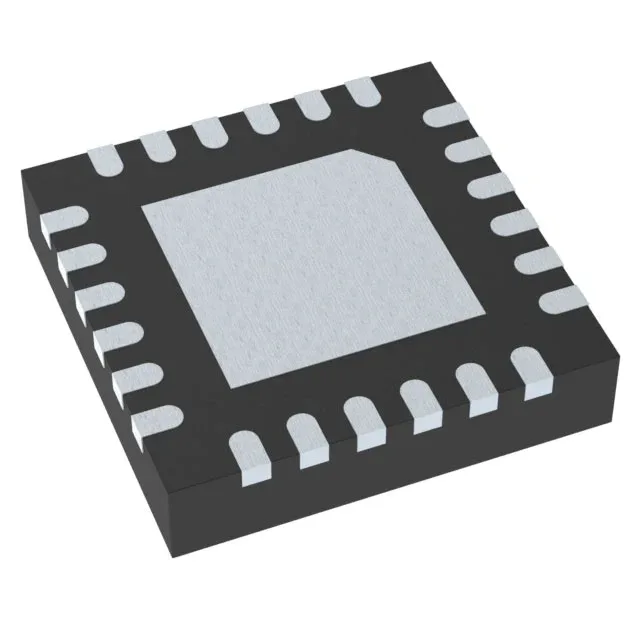
What the 24 MHz clock and 16 KB FRAM actually mean for your BOM
The FRAM is the headline feature here — it's a unified non-volatile memory that acts like Flash for code storage and like EEPROM for data logging, but with byte-level writes and no wear-leveling overhead. That means you can treat it as a single memory pool for firmware and persistent data, which simplifies the BOM by eliminating a separate serial EEPROM for calibration constants or configuration parameters. The 24 MHz clock is enough for sensor polling, communication protocol handling, and control loops, but this isn't a part for heavy DSP or video processing — it's a low-power, mixed-signal MCU for applications where the FRAM write endurance and speed matter more than raw MIPS.
Supply and temperature — where this part lives on the board
The MSP430FR5738IRGER runs from a 2V to 3.6V supply, which covers two alkaline cells in series or a regulated 3.3V rail. The wide range means you can skip a boost converter in battery-powered designs and still have headroom for the internal LDO.
Peripherals and I/O — what's on the pins
That covers the common serial buses for sensor interfaces, display modules, and industrial fieldbuses. The internal oscillator means you don't need an external crystal for the core clock, though the accuracy is good enough for UART at typical baud rates — if you need a precise timebase for CAN or high-speed SPI, you'll still want an external resonator. The 8-channel 10-bit ADC is there for analog sensor inputs, and the built-in brown-out reset and POR handle power-up sequencing without an external supervisor.
Lifecycle and sourcing — no LTB pressure here
TI lists this part as Active in production, so there's no last-time-buy clock ticking.